Guides
Do CSA and NBC rules change automatic door operators sold in Ontario?
CSA C22.2 and ANSI-CSA standards decide which automatic operators can be sold in Ontario, while the provincial building code decides the opening.
What to take away
- No TSSA licence is needed for a standard residential operator in Ontario. The Ontario Building Code (O. Reg. 332/12) governs the opening, and CSA certification is required for the product under CSA C22.2 No. 247 / ANSI-CSA C22.2 No. 247.
- The National Building Code of Canada is a model. Ontario adopts its own regulation, and that regulation is the number an inspector cites.
- TSSA regulates fuels, boilers, elevators and amusement devices. A home garage operator is not on that list.
- Line voltage belongs to a licensed electrician. If your crew terminates it, you are doing electrical work under Ontario rules.
- Keep the certification record, the label photo, the entrapment test result and the signed handover. That file is what answers a claim six months later.
What CSA C22.2 No. 247 and ANSI-CSA C22.2 No. 247 decide
CSA C22.2 is the Canadian Electrical Code, Part II family. It sets construction and test requirements for electrical equipment sold in Canada, and automatic operators sit inside that family.
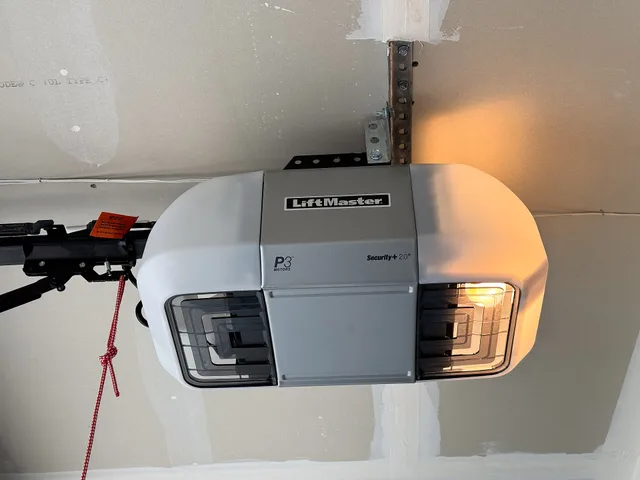
ANSI-CSA C22.2 No. 247 is the binational document most operators are certified to. It covers entrapment protection, control circuits, force limits, and what the operator does when it meets an obstruction.
The behaviour is the part an installer can see. An operator that reverses on contact, or that reads a monitored safety edge, is doing what the standard expects. One that only stops is not.
Certification is the proof, not the marketing sheet. A recognised certification body tests a model and lists it, and that listing is what a supplier produces when an inspector asks why this unit is on this opening.
The standard reaches past the head unit. Springs, track and hardware carry their own requirements, and the operator is one part of the assembly. Review the whole opening.
When you need to confirm which standard applies to a component before ordering it, the CCOHS standards reference is a starting point.
Where the electrical rules sit
An operator needs a supply, a disconnect, and wiring that meets the Canadian Electrical Code. That scope belongs to a licensed electrician, not the door technician.
Know the boundary. Terminating line voltage is electrical work, and Ontario licensing applies to the act regardless of who sold the unit.
What the standard does not decide
The product standard does not decide whether an opening needs an operator at all. Occupancy, use and the egress path answer that, and those are building code questions.
It also does not decide who may install it. Competence, licensing and workplace safety sit outside the product standard.
National Building Code of Canada requirements for openings
The National Building Code of Canada is the model published by the National Research Council Canada. Provinces adopt it with amendments, so in Ontario it is the source text rather than the enforced law.
Its opening provisions cover fire separation, means of egress, door swing, closing devices, and when an opening must resist fire or smoke.
An automatic operator on a fire-rated opening is a different job from one on a residential garage. The operator must not defeat the assembly's rated performance, and its release behaviour has to be right.
The current edition is published by the NRC: National Research Council Canada.
For garage door work the recurring themes are clearances, protection of the opening, and how the door interacts with any fire separation. Get those wrong and the deficiency is a building issue, not a product issue.
Model code, adopted code
A model code has no force until a province adopts it. Ontario does that through O. Reg. 332/12, which is why an inspector cites the provincial text.
Read both when you are unsure. The NBC explains the intent, and O. Reg. 332/12 gives you the number you must meet.
Commercial bays and parkades: different occupancy, different code
Loading docks, parkades and service bays often use the same operator families as residential doors. The code treatment differs because the occupancy differs.
Do not carry a residential assumption into a commercial bay. Check the occupancy classification first, then the opening requirements.
Ontario Building Code adoption and what changes for installers
Ontario adopts its building code through O. Reg. 332/12 under the Building Code Act. That regulation is the enforceable text for construction and renovation in the province.
The provisions that touch garage door work cover structural support, protection of openings, fire separations, and the conditions attached to permits. The consolidated regulation, O. Reg. 332/12, is on e-Laws: Ontario Building Code.
What changes for installers is the paper trail. A permitted alteration may need drawings, a registered designer, and an inspection before the opening is closed in.
Replacing a like-for-like operator is usually simpler than changing the opening. Permit triggers include:
Ontario Building Code adoption
- Opening size change
- New header
- Fire separation alteration
Municipal enforcement varies. Some Ontario municipalities are strict about garage and carport openings on new builds; others concentrate on fire separations. Ask the local building department before you quote.
If you are still setting up, the licensing and compliance guide shows how to keep these obligations visible across a year of jobs.
Permits and who pulls them
The property owner is normally the permit holder. That does not remove your duty to install to the approved drawings.
Install something that does not match the permit and the deficiency lands on the property, then travels back to you. Photograph the opening before and after.
Fire separations
A garage attached to a house is usually separated from the dwelling by a rated assembly, and the door and operator are part of that boundary.
An operator that holds the door open, or fails in a way that leaves the opening unguarded, can compromise the separation. Check the fail behaviour.
TSSA oversight and where it applies
The Technical Standards and Safety Authority administers several technical safety statutes in Ontario: fuels, boilers and pressure vessels, elevators, and amusement devices.
A residential garage operator is not, in general, a TSSA-regulated device. What governs a home garage door is the electrical installation and the building code.
TSSA can still enter at the edges: equipment in a regulated facility, a device on a passenger-carrying system, or work touching a fuel-fired appliance in the same space.
Where a regulated device is involved, the work may need a registered contractor and a permit. Confirm the scope before you mobilize, because unregistered work follows the contractor.
Electrical Safety Authority, TSSA and labour ministry each have their own rules
Electrical work falls under the Electrical Safety Authority in Ontario. Gas work falls under TSSA. Workplace safety falls under the Ministry of Labour, Immigration, Training and Skills Development.
Each carries its own registration and reporting duties.
When a regulated system, fuel or conveyance is involved
Ask when the opening is part of a regulated system, when the site handles fuels, or when the operator sits on a conveyance rather than a door. A short call to the regulator costs less than a stop-work order.
Selling versus installing operators in Ontario
Selling an operator and installing it are separate activities with separate duties. A supplier who never touches the opening still carries product duties.
A seller must ensure the unit is certified for Canada, labelled correctly, and shipped with instructions in the required languages. A seller must not present an uncertified unit as compliant.
An installer takes on the site. Anchoring, track alignment, spring balance, entrapment protection and safe release are installation duties no label can discharge.
Federal product safety law reaches consumer products including door hardware, and the Canada Corporations Act is part of the framework governing how those obligations are administered: Canada Corporations Act.
Energy rules are a separate compliance stream from the electrical standard, and some powered hardware sold in Canada falls under them: Energy Efficiency Regulations.
If you are new to the trade, the steps for getting ready to open legally set out the registrations and records behind a compliant sale.
The split when you do both
Most Ontario door companies sell and install, so both sets of duties attach to the same invoice.
Write the quote so the two are visible. Product supply and installation labour carry different warranties, different limitations, and different evidence trails.
Warranty and liability
A product defect claim goes up the supplier chain. A workmanship claim goes to the installer. Blurring them in your terms invites disputes you cannot win.
Keep the certification record for the model you sold, and the installation record for the opening you worked on.
Documentation, labelling and compliance evidence
Documentation is the part of compliance that survives the job. If it is not in the file, it did not happen.
Start with the certification record. The listing for the exact model, at the voltage and configuration you supplied, belongs in the job file and in your product records.
Next, the label. The unit should carry the certification mark, the model identifier and the electrical ratings. Photograph it before the unit goes up.
Then the instructions. Keep the manufacturer's installation and safety instructions as supplied, and keep your site-specific method statement beside them.
The garage door service license requirements piece covers what comes up when a regulator or customer asks who was allowed to do the work.
A worked example
A two-bay shop in Ontario orders twelve operators for a residential subdivision. The units arrive certified to ANSI-CSA C22.2 No. 247, labelled, with English and French instructions.
The installer fits each unit to a permitted opening, checks balance and entrapment protection, and records the reversal test.
Six months later a homeowner reports a door that closed on an object. The installer produces the test record and the label photo. The claim narrows to maintenance, not installation.
Checklist before the truck leaves
- Certification record for the exact model on file
- Label photographed and legible
- Instructions in the required languages given to the owner
- Entrapment protection tested and recorded
- Reversal or force test result written down
- Handover signed by the property owner
- Permit and inspection status confirmed where a permit applied
Choosing equipment with compliance in mind
Equipment choice drives documentation load. A certified model with a stable listing is easier to defend than a grey-market unit with no paper.
The service equipment brands comparison looks at how brand support affects parts, listings and warranty handling.
Budget matters too. The used garage door service equipment cost comparison sets out where savings are real and where they create compliance risk.
Records retention
Keep product records for the life of the listing, and job records at least as long as the limitation period in your contracts. When in doubt, keep longer.
Store them so a successor can find them. A file only one person can open is not a record system.
Common questions
Do I need a TSSA licence to install a residential garage door operator in Ontario?
Generally no. TSSA oversight attaches to regulated devices such as fuels equipment and elevators, not to a standard residential operator. Check the scope if the site has a regulated system.
Is the National Building Code of Canada enforceable in Ontario?
Not directly. Ontario adopts its own building code regulation, O. Reg. 332/12, and that is the text an inspector cites. The NBC explains the intent behind the provincial rules.
Which standard proves an operator is acceptable for sale in Canada?
Certification to CSA C22.2 No. 247 and, for many operators, ANSI-CSA C22.2 No. 247. The certification mark and listing are the evidence.
Who is responsible if an uncertified operator is installed?
Both parties can be exposed. The seller carries product and labelling duties, and the installer carries the site and installation duties. Keep records for both.