Guides
Serving the GTA, Montreal and Vancouver industrial corridors with rolling doors
Rolling-steel door contracts across the GTA, Montreal and Vancouver: cycle-based maintenance, after-hours response and provincial coverage rules.
What to take away
- High-cycle rolling-steel contracts are sold on cycle count, not calendar months. The door that cycles 120 times a shift sets the inspection interval.
- Ontario sites quote against WSIB coverage, Quebec sites against CNESST registration, BC sites against a WorkSafeBC clearance letter. Property managers ask for proof before they sign.
- Metro Vancouver salt air shortens hardware life. Springs pit, rollers seize and tracks corrode faster than in the 401 corridor.
- After-hours response is the term clients negotiate hardest. Name the covered hours, the window and what counts as an emergency.
- Labour burden differs by province, so a three-site contract needs three cost lines, not one blended rate.
What the 401 and 407 corridors buy
The warehouse belt from Mississauga through Brampton, Milton, Vaughan and Oshawa runs some of the highest door cycle counts in Canada. A single dock door there can cycle 50 to 150 times a shift.
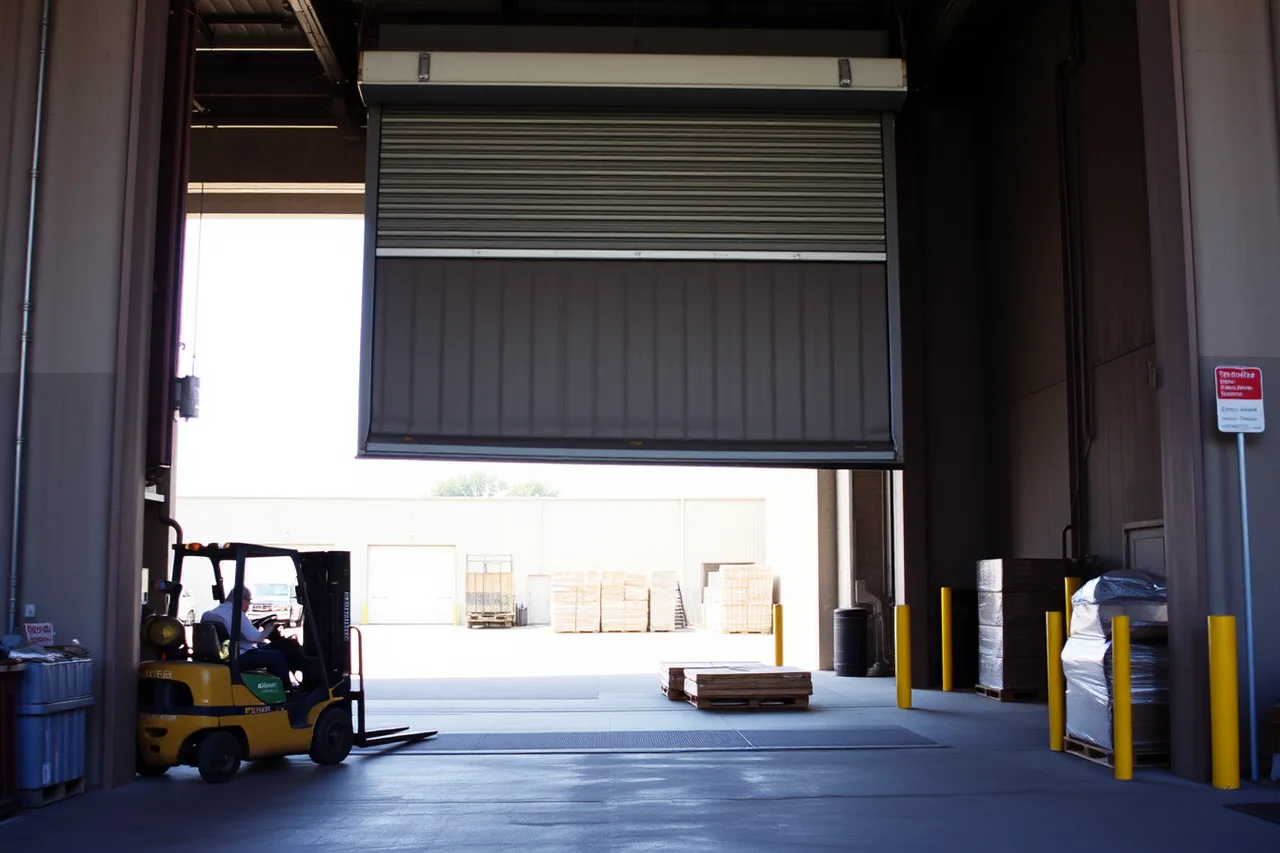
At that volume a track knocked out of alignment stops being a nuisance. It becomes a loading delay inside two or three weeks.
Service managers in this corridor price a rolling-steel contract as scheduled intervention, not repair. The contract sets inspection intervals from cycle count and names the parts replaced before they fail: rollers, hinges, cables, bottom bars and operator components.
Contractors that work this belt daily include Overhead Door Company of Toronto, Richards-Wilcox Canada in Burlington and Blue Giant Equipment Corporation in Brampton. The doors they open up are usually Richards-Wilcox, Overhead Door, Wayne Dalton or CornellCookson units, with LiftMaster MH or GH series operators or Manaras-Opera panels.
Cold storage and food processing add a second cost. Door speed and seal integrity drive refrigeration load, and a door held open eight extra seconds per cycle shows up on the energy bill. Seal inspection and weatherstripping replacement belong in the contract at defined intervals.
For how these contracts sit inside daily dispatch, see garage door service operations.
What a corridor contract covers
- Inspections quarterly or semi-annually, set by cycle count.
- Lubrication of tracks, rollers, bearings and chains.
- Spring tension and cable wear checks.
- Operator control and safety device testing, including UL 325 entrapment checks on automatic operators.
- Written reports with photos and parts recommendations.
Ontario coverage and code notes
Ontario service contractors carry WSIB coverage, and commercial property managers usually ask for a clearance certificate before awarding work. Installation requirements sit with the National Building Code of Canada and the provincial building code, and CSA Group standards apply to automatic door operators. Confirm the current edition with your local inspector rather than quoting a clause number from memory.
Rated fire doors carry the hardest rules. NFPA 80 calls for an annual inspection and drop test, plus a repeat test after any repair, and the ULC label states the rating. Rolling doors are also cycle-rated: 10,000 cycles is a standard build, up to 100,000 cycles a high-cycle spec.
Montreal industrial parks and the cold-weather problem
Montreal's industrial parks run from Saint-Laurent and Dorval through the East End to Longueuil and Boucherville, serving food, aerospace, pharmaceutical and logistics tenants. Many run bilingual operations, so contracts, invoices and safety signage have to exist in French and English. Quebec's language rules govern how those documents are written.
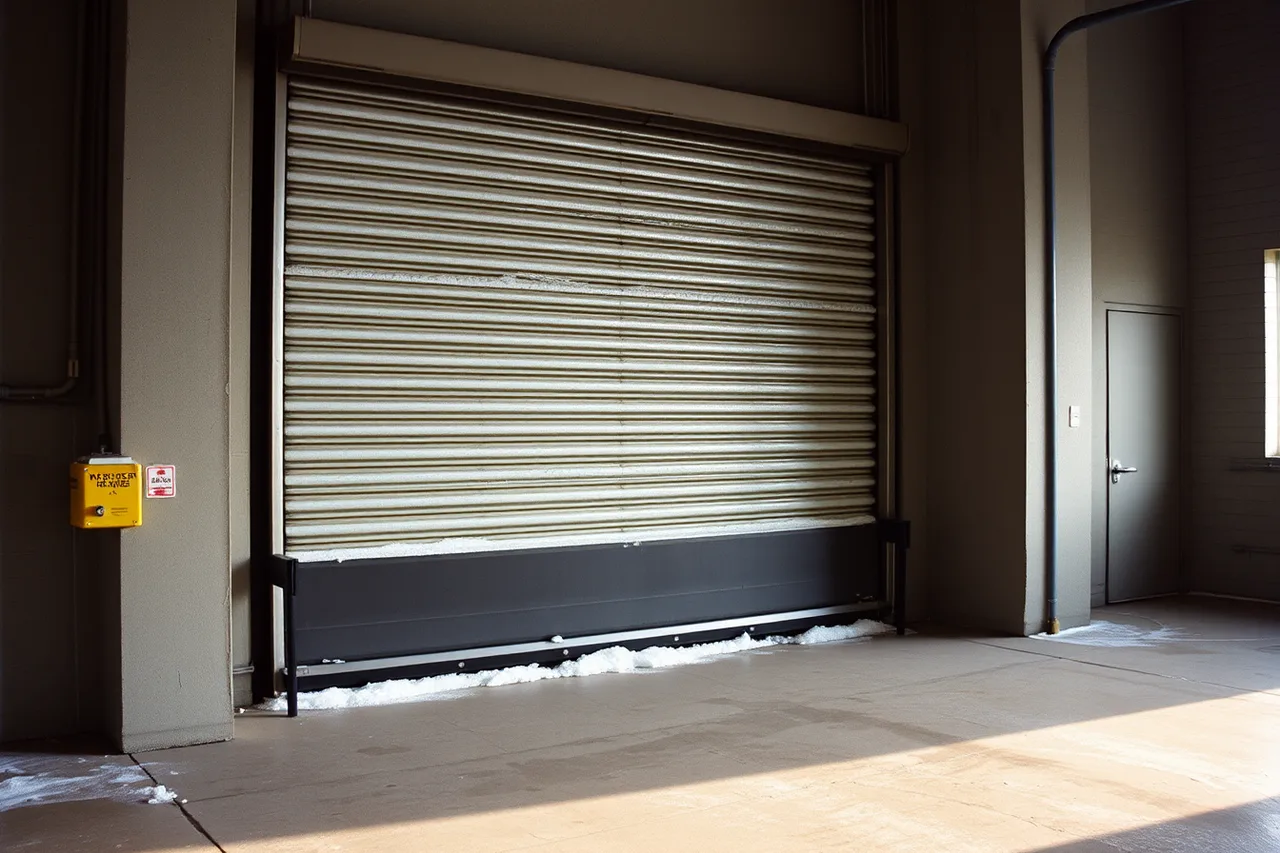
Specifications here often call for insulated rolling-steel doors with advanced safety edges. The climate adds its own wear. Freeze-thaw cycles from November through March stress seals, bottom bars and operator mechanisms, and a door that runs clean in October can seize in January if the schedule skips cold-weather preparation.
CNESST sets compensation and prevention requirements for Quebec door service employers. Contractors bidding on Montreal industrial work should confirm registration and be ready to show proof of coverage. The Quebec Consumer Protection Act touches certain contract terms, though commercial agreements carry more flexibility than residential ones. A lawyer reads the clause, not a service manager.
Named contractors quoting in these parks include Overhead Door Company of Montreal, ASSA ABLOY Entrance Systems (the Richards-Wilcox brand) and Manaras-Opera, a Quebec operator maker whose panels are common on local rolling doors.
Older building stock matters too. Some facilities in Saint-Laurent and the East End have door openings that predate current code, and bringing an operator up to CSA standards may require structural work around the opening. Scope that before quoting.
For routing across the island and the off-island parks, see schedule garage door service jobs.
Cold-weather preparation checklist
- Test door balance and spring tension before freeze-up.
- Inspect and replace worn bottom seals.
- Lubricate with cold-rated products.
- Check operator clutch and limit settings.
- Clear snow and ice from tracks and thresholds.
- Confirm emergency release function in cold conditions.
Metro Vancouver and coastal corrosion
Metro Vancouver logistics clusters around Delta, Surrey, Richmond, Burnaby and the Port of Vancouver. Rain and salt air attack tracks, springs and hardware, and a door that lasts ten years in the 401 corridor may need hardware replacement in five in Richmond or Delta.
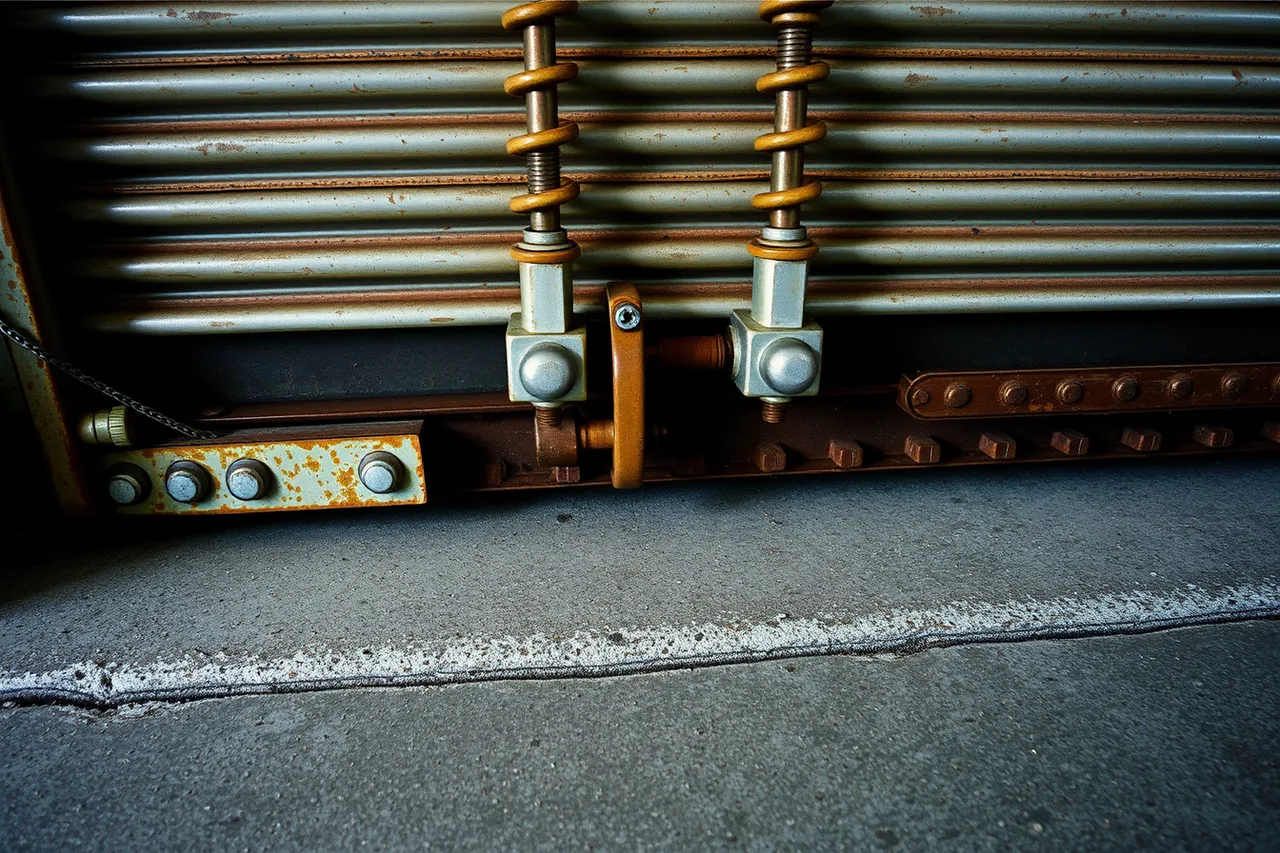
Salt air wears the same parts that high cycle counts wear. Springs pit and fail early, rollers seize, and corroded track surfaces push the door out of alignment. Contracts here should specify corrosion-resistant hardware, stainless or coated fasteners, and more frequent lubrication.
Work in this cluster is handled mainly by Creative Door Services in Surrey and Overhead Door Company of Vancouver. Coastal quotes name the hardware rather than assume it: stainless or galvanized track, stainless springs and rollers, and coated fasteners.
WorkSafeBC regulates workplace safety for BC door service employers, and property managers ask for a clearance letter before letting a crew on site. The letter confirms premiums are paid and the account is in good standing. Site work falls under the Occupational Health and Safety Regulation (BC Reg. 296/97). See Why do I need a clearance letter? - WorkSafeBC.
WorkSafeBC assigns each employer a classification unit and industry rate, and that rate feeds directly into your labour burden. Look yours up through Find your classification unit, industry, or rate - WorkSafeBC.
Larger installation projects in BC may trigger a Notice of Project filing, with the threshold set by project size and duration. Check whether your job qualifies using Submit a Notice of Project form - WorkSafeBC.
Coastal service adjustments
- Corrosion-resistant rollers and hinges.
- Stainless steel or coated fasteners.
- Quarterly lubrication at exposed openings.
- Annual spring and cable inspection.
- Sealed operator enclosures where washdown happens.
Setting inspection intervals from cycle count
Cycle count drives the interval. A door cycling 100 times a day and a door cycling 20 times a day do not belong on the same schedule. The contract should state the frequency, the tasks at each visit and the parts replaced on a planned basis.
Setting inspection intervals
| Cycle count per day | Inspection frequency | Key tasks |
|---|---|---|
| Under 25 | Semi-annual | Lubrication, visual inspection, safety test |
| 25 to 75 | Quarterly | Above plus spring and cable check |
| 75 to 150 | Monthly | Above plus roller and hinge replacement review |
| Over 150 | Bi-weekly | Above plus operator diagnostics and track alignment |
These are starting points. Door age, environment and duty rating move them. A salt-air site in Delta may need monthly service at moderate cycle counts, while a climate-controlled facility in Vaughan can stretch intervals.
Two numbers lead each visit: the cycle counter reading off the operator and the clamp meter reading of motor current draw, taken with a Fluke 376 or similar. Track plumb is checked with a laser level, and lubrication is white lithium or PTFE grease, not plain oil.
Every visit should end in a written report: cycle counts, parts condition, adjustments made, recommendations. That record supports warranty claims and lets property managers budget replacements instead of absorbing them as emergencies.
For the daily framework that keeps these visits consistent, see garage door service sop checklist.
Building the schedule
- Survey each door and record cycle count, age and environment.
- Assign an inspection frequency from the table above.
- List the tasks and the parts to inspect at each visit.
- Set a reporting format that captures condition and recommendations.
- Review quarterly and adjust for measured wear.
After-hours response and service-level commitments
After-hours response is where commercial contracts are won or lost. A door that fails at 2 a.m. stops loading and idles a shift, so the agreement states a response time rather than a best effort. Two to four hours is the common range for emergency call-out inside one metropolitan area.
The clause should name the covered hours, the response window and what happens if the window is missed. Some contracts carry service credits, others set a priority ranking across multiple sites. Define emergency in writing: door stuck open, door stuck closed, safety device failure or security breach.
Coverage needs a dispatch plan behind it. Name the on-call technician, the backup and the parts carried in the service vehicle. High-cycle sites often hold critical spares on site, springs, cables, rollers and a spare operator board, which removes the second trip.
For the numbers that show whether after-hours service is paying, see garage door service kpis.
Response tiers
- Tier 1door inoperable and blocking operations. Two-hour response.
- Tier 2door operating but unsafe or unreliable. Four-hour response.
- Tier 3non-urgent repair. Next business day.
Pricing a multi-cluster contract
Pricing for rolling-steel service reflects provincial labour costs, workers' compensation rates and travel between clusters. A contract covering Mississauga, Milton and Oshawa has different travel economics than one covering a single Montreal industrial park, and blending them into one rate hides the loss.
Budget ranges: employer burden (CPP, EI and provincial workers' compensation) adds roughly 20 to 35 per cent to base wage, and corridor travel is not trivial, with Brampton to Montreal East about 550 km each way.
Terms to settle before signing:
- Scope and frequency of preventive maintenance.
- Emergency response times and after-hours rates.
- Parts markup and warranty on replaced components.
- Contract length and renewal conditions.
- Termination notice and transition support.
Tax treatment follows the province. Ontario uses HST, Quebec uses GST and QST, and British Columbia uses GST and PST. Register with the Canada Revenue Agency and show taxes separately so commercial clients can claim input credits where they apply. An accountant confirms your registration and filing position.
Market data helps size the opportunity. Canada Housing Research, Data and Insights | CMHC gives construction and housing context that informs industrial service demand. 2025 Rental Market Report | CMHC covers major centres and helps you read tenant turnover and building maintenance cycles.
For contractors weighing new regions, see garage door service expansion.
Worked example: pricing three sites
A company bids three warehouse sites, each with eight high-cycle rolling doors: Brampton, Montreal East and Delta.
Pricing three sites
- Estimate annual preventive maintenance hours per site. Brampton 96, Montreal East 88, Delta 104 with corrosion checks.
- Add after-hours standby12 hours per site per month.
- Cost travel. Brampton to Montreal East needs overnight stays; Delta is local.
- Set a parts allowance as a percentage of contract value. Brampton 6, Montreal East 7, Delta 9.
- Apply provincial labour rates and workers' compensation premiums.
- Present per-site pricing with a combined discount for the three-site commitment.
Delta carries the highest parts allowance because salt air shortens hardware life. Montreal East carries bilingual reporting and CNESST documentation. Brampton gains from dense route coverage that lowers travel cost per visit.
Common questions
How often should high-cycle rolling doors be inspected?
Cycle count sets the interval. Doors cycling over 150 times a day need bi-weekly checks, while doors under 25 cycles a day can run semi-annual inspections. Environment and door age move the interval in either direction.
What belongs in an after-hours response commitment?
Covered hours, the response window, the definition of an emergency and the consequence for missing the window. It should also name the on-call technician and the parts stocked for emergency repair.
Do Montreal service contracts need to be in French?
Quebec language rules require French documentation for many business communications, including contracts, invoices and safety materials. Bilingual service is standard practice in Montreal industrial parks. Have a lawyer review the clause wording.
How does coastal corrosion change Metro Vancouver service?
Salt air accelerates rust on tracks, springs and fasteners, so hardware may need replacement in half the time it lasts in Toronto or Montreal. Contracts should specify corrosion-resistant parts and more frequent lubrication.
What coverage do commercial door contractors need?
Provincial workers' compensation coverage, whether WSIB in Ontario, CNESST in Quebec or WorkSafeBC in British Columbia, plus GST/HST registration with the Canada Revenue Agency. Commercial clients commonly request a clearance letter before awarding work.