Guides
Garage door service business operations: Saskatchewan and Manitoba
Garage door service business operations in Saskatchewan and Manitoba: farm door specs, high-cycle springs, distance fees and provincial rules.
Garage door service business operations in rural Saskatchewan and Manitoba come down to three things: hardware spec'd for the real cycle count, pricing that pays for the drive, and paperwork that stands up to provincial law.
What to take away
- A farm shop opening is sized to the machine that drives through it, so measure clear height and width before you quote, not after.
- High-cycle torsion springs, commercial track and heavy bottom seals are the three specs that keep you out of the same yard next spring.
- Price the drive as its own line at a published per-kilometre rate, and bundle every building on the yard into one trip.
- Book planned replacements in late spring or early fall; harvest and freeze-up belong to emergency work at emergency rates.
- The Saskatchewan Employment Act, Manitoba's Employment Standards Code and Manitoba's Workplace Safety and Health Act apply to rural installers exactly as they do in Regina or Winnipeg.
Sizing a farm shop door to the machine
A farm shop door is a wind barrier, a dust seal and a security wall for equipment worth more than the house down the road. The conversation starts with clear height, not width.
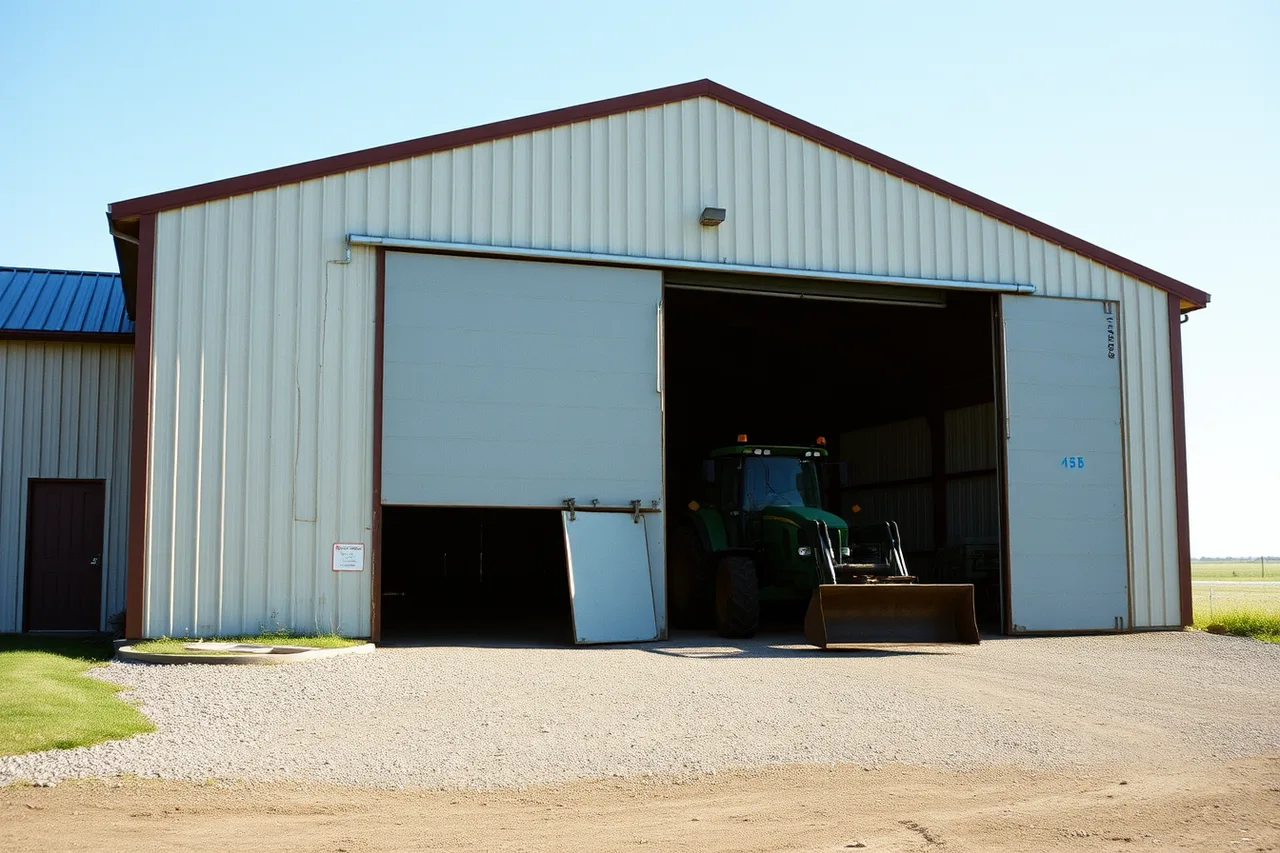
Most Prairie shops are built around a combine, a tractor with a loader, or a truck and trailer. Fourteen to sixteen foot clear openings are common, and twenty foot openings show up on newer yards. Above twelve feet wide, you are specifying commercial track, heavier gauge steel and springs rated for the real cycle count.
Ask what drives through on the busiest day of the year, then add clearance for mirrors and loader arms. A door sized to the wall rather than the machine gets hit inside one season.
Walk the opening before you write anything. Check the header for sag, the jamb for rot at the base plate, and the floor for frost heave. A slab that has lifted two inches will foul a bottom seal and tear it out by spring.
Grain bin doors are a different job
A bin door is small, often under four feet, and it cycles far more often than a shop door. It also sits in a wall that flexes with grain load, so hinges, latches and frames take abuse a residential panel never sees.
Grain bin door repair is steady work and almost always urgent. Carry the common latch and hinge sizes on the truck, because a second trip for a five dollar part costs you the day.
What fails first, and in what order
Springs fail first. A shop door cycled twenty times a day through seeding and harvest wears out torsion springs in a fraction of the residential life. Residential-grade springs are commonly rated at 10,000 cycles; high-cycle springs come rated at 25,000, 50,000 or 100,000. Specify for the actual cycle count and write that number on the quote.
Bottom seals and weatherstripping fail second. Dust, gravel and chaff grind them away, so a seal that is cheap and easy to source beats one that is stronger and unavailable in February.
Rollers and hinges fail third, usually because nobody greased them. Sell a service interval with the install instead of waiting for the callback.
Handling long-distance Prairie calls
A rural call is a day, not an hour. Price it like a city service call and you lose money on every one, then blame the customer for living where they live.
Distance is the first variable. A call ninety kilometres out is three hours of driving before anyone touches a door, and that time does not disappear because the customer is friendly.
Quote rural work as a package: travel, minimum on-site time, parts, and a written statement of what happens when the job runs long. Customers accept it when it is explained once and applied the same way every time.
Structuring the quote
A farm shop door 120 kilometres from your yard needs two torsion springs and a bottom seal. Drive time is three hours return, on-site work is two hours, and the parts are modest.
Quote travel at a published per-kilometre rate, two hours of labour at your standard rate, parts at list, and a note that any additional work is quoted before it starts. The customer gets a number they can check line by line. You keep a margin you can defend.
Three buildings on the same yard go on one quote and one trip. Bundling is the biggest lever on rural profitability, which is why garage door service pricing has to be built around trips rather than individual doors.
Trip fee or folded in
Charge a visible trip fee on single-door calls. Fold travel into the hourly rate on multi-building accounts where you are already working the area that week.
Never bury travel inside a parts markup. The moment the customer compares your spring price to a Winnipeg supplier, the whole quote reads as dishonest and you lose the account.
Scheduling around harvest and freeze-up
Rural demand is not spread evenly. It spikes before seeding, spikes again before harvest, then collapses into emergency calls once the temperature drops and something breaks.
Between late July and early October, farmers are in the field before daylight and after dark, and they will not stop a combine to meet a technician. You work early mornings, evenings and Sundays, or you do not work.
That also means booking a September door replacement in June. The weather window for a full swap closes fast on the Prairies, and the same window fills your calendar whether you sell to grain farms, cattle operations or mixed yards. Saskatchewan's agriculture and natural resources industry plans its year around that rhythm, and so does your booking sheet.
The freeze-up rush
Once the ground freezes and the first serious snow lands, every door that stuck in October becomes an emergency. Springs snap in the cold, seals tear, and operators stall.
Price those calls accordingly. A Saturday night callout two hours from town is worth more than a Tuesday morning tune-up, and the customer already knows it.
Using the shoulder seasons
Late fall and early spring are for planned work: new operators, insulation upgrades, full door replacements. Farmers are more willing to schedule then and your crew is not fighting the clock.
With more than one truck, schedule garage door service jobs by route rather than by request. A Tuesday loop through three rural municipalities beats three separate trips to the same grid road.
Hardware that survives gravel and dust
Gravel roads throw grit at everything, dust works into every moving part, and freeze-thaw moves the ground under the slab. Specify for that environment and warranty calls drop. Specify for price and you are back in the same yard next year, in worse weather.
Residential default
- Springs
- Standard cycle
- Steel gauge
- 24 to 26
- Bottom seal
- Standard vinyl
- Track
- Light residential
- Finish
- Painted steel
- Operator
- 1/2 hp chain drive
Rural Prairie spec
- Springs
- High-cycle torsion, rated for daily use
- Steel gauge
- 20 to 22, or insulated sandwich panel
- Bottom seal
- Heavy rubber or brush seal
- Track
- Commercial gauge, reinforced
- Finish
- Galvanized or factory-coated steel
- Operator
- 3/4 to 1 hp belt or jackshaft, with battery backup
Why galvanized and coated steel win
Paint fails on a door facing a gravel road. Stone chips open the surface, moisture gets in, and rust starts at the bottom panel where snow sits.
Galvanized steel and factory-applied coatings tolerate that abuse far better. They cost more up front and less across ten years.
Insulation and condensation
An unheated shop with an insulated door collects condensation on the warm side. The water runs down, pools at the bottom panel, and rust starts there.
Where a building is heated intermittently, recommend a door with a thermal break and a sealed perimeter. It costs less than replacing a bottom section every few years.
When the old door and hardware leave the site, Saskatchewan's Environmental Management and Protection Act, 2010 and Manitoba's Environment Act cover what happens to painted steel, coated panels and springs, so check provincial guidance before you haul a load to the landfill.
Employment and safety rules for rural crews
Rural work does not sit outside labour law. Saskatchewan's employment standards sit in The Saskatchewan Employment Act and its regulations, which set wages, hours, overtime and rest periods, and they apply whether the job is in Saskatoon or on a grid road two hours north.
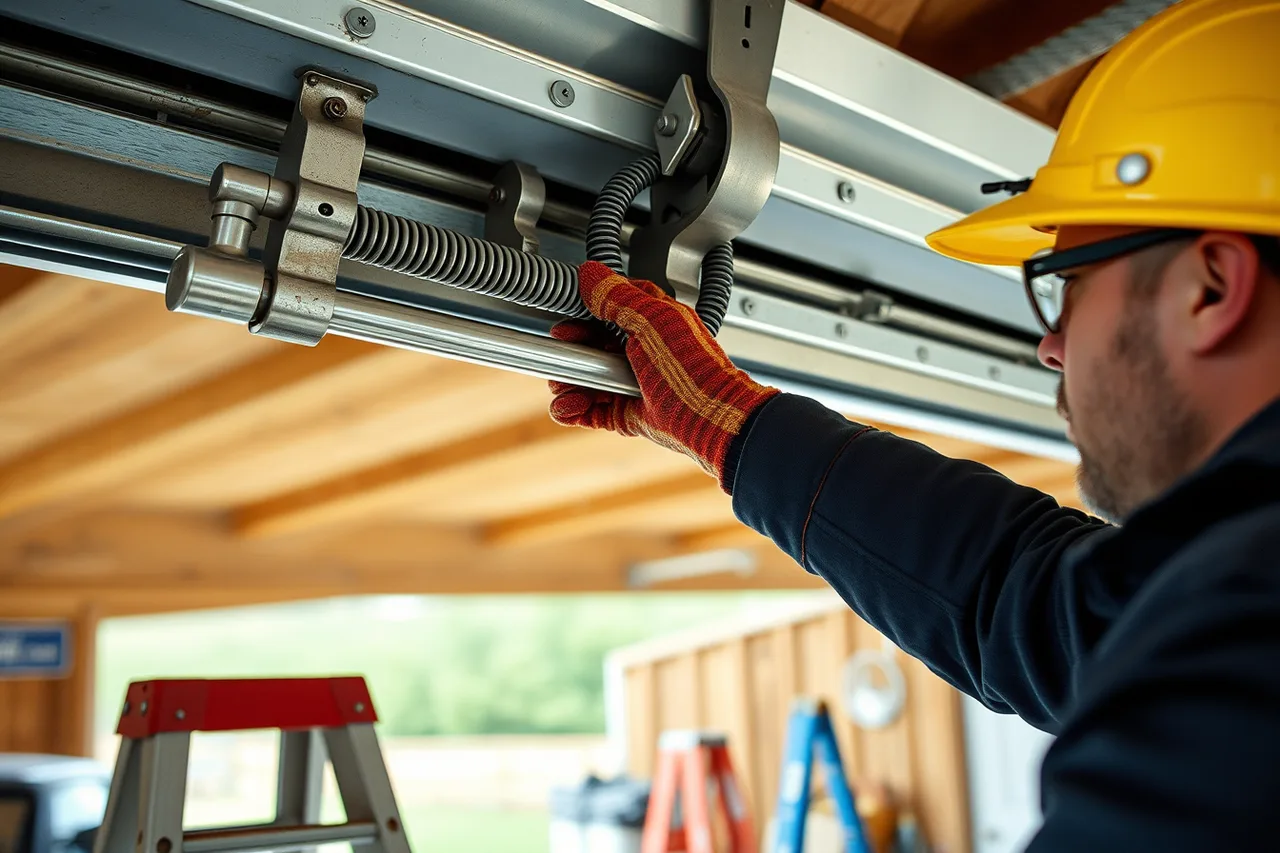
Read them before you build a rural pay structure. Long drives and early starts create overtime questions that a simple hourly rate does not answer.
Manitoba employers work from a different statute book. The Employment Standards Code sets wages and hours, and the Workplace Safety and Health Act covers fall protection and lockout procedures, and garage door work touches both. The Workplace Safety and Health Division enforces that act, while SAFE Work Manitoba, the prevention arm of the Workers Compensation Board of Manitoba, publishes the safety guidance crews are expected to follow. In Saskatchewan, the Occupational Health and Safety Division within the Ministry of Labour Relations and Workplace Safety enforces the safety requirements under The Saskatchewan Employment Act.
Safety on a farmyard
Door work involves overhead loads, springs under tension and power tools. A farmyard is not a controlled shop, and the hazards are less predictable than in a city bay.
Winding a torsion spring without proper bars and a controlled procedure is the most common serious injury in this trade. Train for it, enforce it on every site, and hold the line when the farmer is watching and wants it done faster.
Fall protection matters on tall shop doors and on any work near a bin roof. For treatment of an injury, follow your workplace safety authority and a physician.
Registration, licensing and records
In Saskatchewan, business registration is filed through Information Services Corporation (ISC), the provincial Crown corporation responsible for corporate registries. In Manitoba, registration goes through the Manitoba Companies Office. A rural address does not exempt you from either, and you should keep the paperwork current before you take work across the border.
Payroll and GST/HST registration through the Canada Revenue Agency, workers' compensation coverage through WCB Saskatchewan or the Workers Compensation Board of Manitoba, and provincial business registration all apply to Prairie door companies the same way they apply anywhere in Canada. Rural customers rarely ask, but a claim or an audit will. Confirm your own obligations with an accountant.
Hiring in small communities
Hiring in small towns runs on word of mouth. That works until you need someone with a trade background and a clean driving record, which is when you post properly.
For trades that struggle to hire, the Saskatchewan Apprenticeship and Trade Certification Commission and Apprenticeship Manitoba manage apprenticeship programmes. Temporary foreign worker programmes run through Employment and Social Development Canada. Both routes carry paperwork and timelines, so start early if you plan to use them.
Quoting a rural account so the margin survives
Most rural quotes fail the same way: the travel was real but invisible. The customer saw a high number for two springs and called someone closer.
Make the quote explain itself. Every line should be something the customer understands without a phone call.
Quoting a rural account
- Measure the opening, the header and the floor, and photograph all three.
- Record the round-trip distance from your yard to the site.
- List parts by name, size and cycle rating, with quantities.
- State labour hours on site and travel time separately.
- Add a travel cost recovery line at a published rate.
- Note exclusions and how additional work will be quoted.
- Give a validity date, because steel and spring prices move.
Travel cost recovery is not a penalty
It is the honest cost of bringing a truck, tools, stock and two technicians to a yard that is not near anything. Publish the rate, apply it to everyone, and answer the question in one sentence: the drive is part of the job.
- Round-trip distance measured and recorded
- Travel line shown separately on the quote
- Minimum on-site time stated
- Parts listed with cycle ratings
- Exclusions and additional-work policy written down
- Validity date included
- Deposit terms for special-order doors
Choosing which rural accounts to chase
A single bin door three hours out rarely pays on its own. It pays when it rides along with other work in the same municipality.
Look for clusters: a yard with several buildings, a colony with a shared shop, or a group of farms on one grid road. That is where garage door service expansion into rural territory makes money instead of costing it.
Before you commit a truck to a new route, compare it against the smaller Prairie centres that already have the population to support a regular loop — Brandon, Portage la Prairie or Steinbach in Manitoba, Yorkton, Melfort or Swift Current in Saskatchewan. It is the same comparison every operator runs when weighing markets for garage door service against a long rural run.
Common questions
Do farm shop doors need different hardware than residential doors?
Yes. Larger openings, higher cycle counts and abrasive dust call for commercial track, high-cycle springs and heavier steel. Residential hardware fails early in that environment, usually within a season or two.
How should I price a rural call two hours away?
Quote travel separately at a published rate, add a minimum on-site time, then list parts and labour. Bundling several buildings into one trip is the main way to protect the margin, and it is the core of how you price garage door service jobs on any rural route.
When should I schedule farm door work?
Book planned installs in late spring or early fall, when farmers will stop for a day. Expect emergency calls through freeze-up, and price weekend or after-hours rural work above weekday rates.
Do Saskatchewan and Manitoba labour rules apply to rural installers?
Yes. The Saskatchewan Employment Act covers wages, hours, overtime and rest periods wherever the work site sits, and Manitoba's Employment Standards Code does the same for crews working there. On safety, Manitoba's Workplace Safety and Health Act and its Workplace Safety and Health Division apply, and both provinces require workers' compensation coverage through WCB Saskatchewan or the Workers Compensation Board of Manitoba.