Guides
Garage door service winter maintenance plan for Canadian prairies
Garage door service winter maintenance on the Canadian prairies means cold-rated lubrication, seal checks, and a seasonal schedule keyed to ice and salt.
What to take away
- Prairie winter service is interval based, not component based: first month, each season, yearly, and every few years.
- The bottom weather seal is the first thing to fail from neglected cold weather service.
- Cold-rated lubricant and salt corrosion checks matter more than general garage door lubrication.
- Symptoms like shuddering, reversing, or frost on the panel map to specific causes before a full door failure.
- Use Canadian weather warnings to time non-emergency calls.
Prairie winters punish overhead doors with extreme cold and ice buildup on the threshold. This garage door service winter maintenance plan for Canadian prairies groups tasks by interval rather than by part. Environment and Climate Change Canada's Canadian Centre for Climate Services describes the temperature swings that make seals shrink and crack on the same day.
After the first month
Run this checklist after the first month of prairie cold, usually late November through late December.
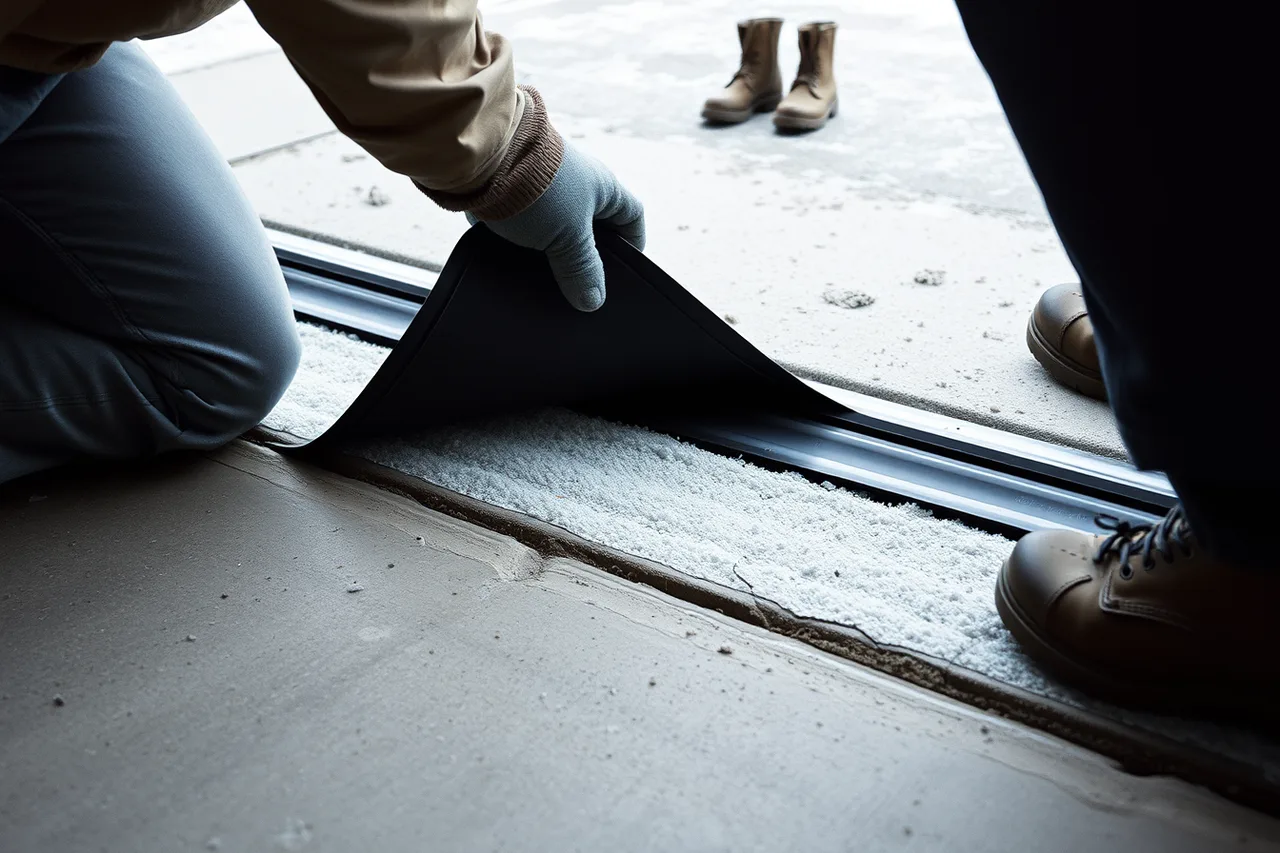
- Inspect the bottom seal for cracks where salt and meltwater collected at the threshold.
- Tighten track bolts that worked loose as the metal contracted.
- Wipe exposed springs, hinges, and rollers with a dry cloth, then apply cold-rated lubricant.
- Test the door balance by lifting it halfway and releasing; it should not drift up or down.
- Check the auto-reverse force with a block of wood on the floor.
On farms and acreages in Saskatchewan and Manitoba, exposure differs from city lots, so compare notes with Rural and agricultural garage door work.
Each season
Each winter season before the first hard cold snap, schedule these tasks.
Use Environment and Climate Change Canada weather tools and warnings to move non-emergency calls away from a forecast -35 C wind chill. This reduces strain on workers and door cables.
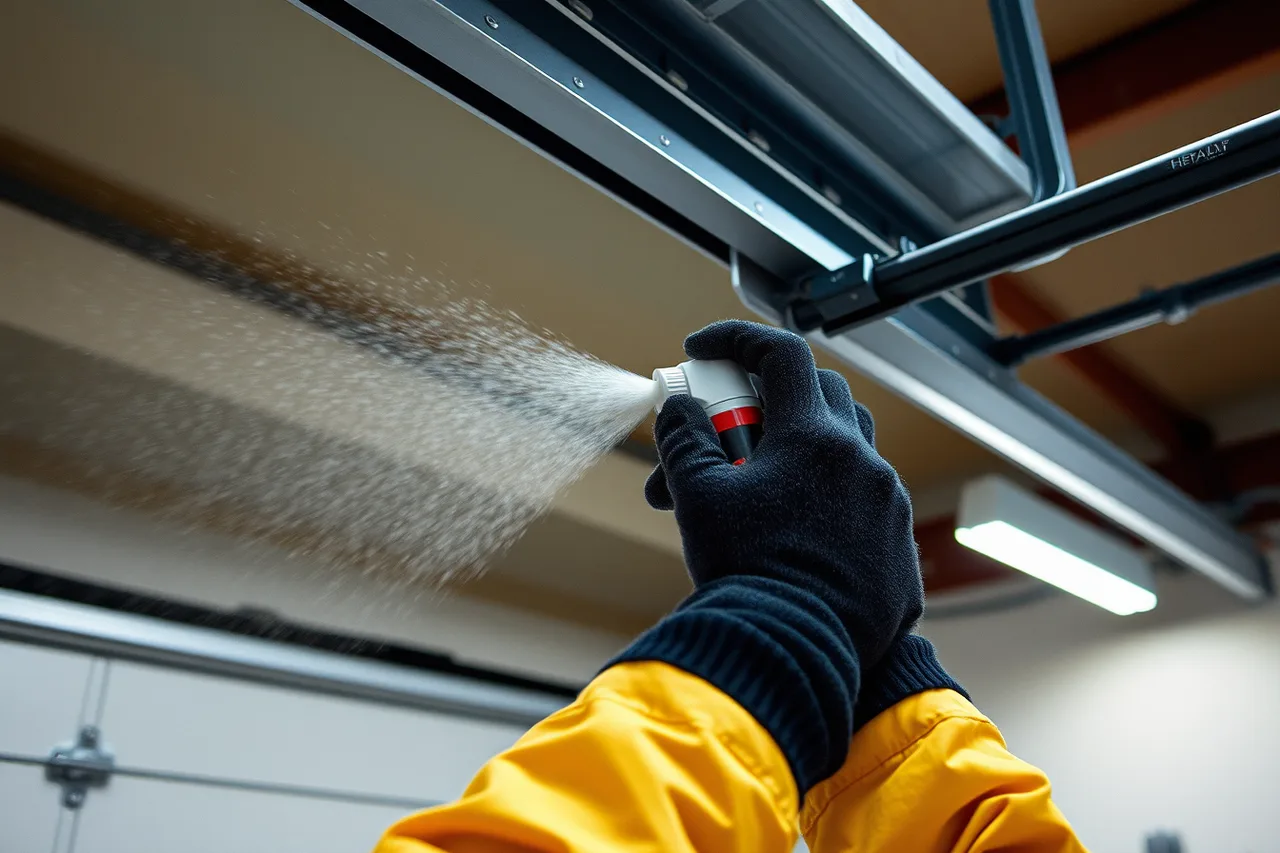
Inspect perimeter and bottom weatherstripping for gaps, tears, and salt crust. Apply cold-rated spray lubricant to hinges, rollers, springs, and the opener rail. General-purpose grease thickens below -20 C and causes the door to bind. Clear ice buildup from the threshold before opening, because forcing a frozen door can snap cables or strip opener gears.
Once a year
Annual preventive maintenance, rather than failure repair, is the core of a prairie service plan. This is preventive maintenance with a seasonal focus.
Follow this annual sequence:
- Remove the opener cover and clear motor dust, then inspect drive gears for wear.
- Retighten all hinges, brackets, and track bolts; prairie thermal cycling loosens them.
- Clean photo-eye lenses with warm water and realign them, because salt film blocks the beam.
- Apply cold-rated lubricant to the torsion spring and run two full open/close cycles.
Pair the annual pass with choosing doors and hardware for the Canadian prairie climate zone.
Every few years
Replace nylon rollers every two to three years, or when rollers show flat spots. Replace the bottom weather seal and side seals as a set.
Inspect spring cycle count; one-piece and extension springs wear faster in extreme cold. If the opener is over twelve years old, check its capacitors and limit switches. For repeated cold-weather faults, work through the garage door opener repair decision guide before ordering parts.
Signs it needs attention now
The first thing that fails from neglected winter maintenance is the bottom weather seal. It cracks below -25 C and lets meltwater refreeze along the panel. Symptoms then map to causes.
| Symptom | Likely cause on Canadian prairies |
|---|---|
| Door shudders or groans below -20 C | Lubricant thickened; rollers and hinges need cold-rated spray |
| Door reverses before touching the floor | Photo-eye lens filmed with salt mist or ice; clean and realign |
| Frost forms along the bottom panel inside | Bottom seal cracked; replace seal to stop air leakage and ice |
| Track shows white crust or rust streaks | Salt pitting from meltwater; wire-brush and apply cold galvanizing spray |
| Opener runs but door barely lifts | Extension or torsion spring lost tension; call a licensed technician |
For dispatch patterns on callbacks, the callback pattern actually reveals a service quality problem before customers report it.