Guides
How to source garage door parts without overpaying
How to source garage door parts without overpaying: compare US wholesale distributors, cash account terms, and spring and cable supplier price bands before ordering.
What to take away
- How to source garage door parts without overpaying comes down to comparing landed cost across wholesale distributors, not retail unit price.
- Buy from US garage door parts distributors like Action Industries, DDM Garage Doors, and North Shore Commercial Door once your shop repeats common parts.
- Ask spring and cable suppliers for cash account tiers and ACH terms before you compare list prices.
- Track landed cost per truck, including freight and small-order fees.
- Stock high-turn springs and hinges in low-to-high ranges only after checking cycle rating and wire size.
What the wholesale price range covers
The first move is to compare wholesale garage door hardware distributors against local hardware-store retail. Action Industries, DDM Garage Doors, and North Shore Commercial Door publish online price bands. The invoice total changes with order size, freight, and account status.
| Part or supply | Wholesale low-high per unit (USD, illustrative) |
|---|---|
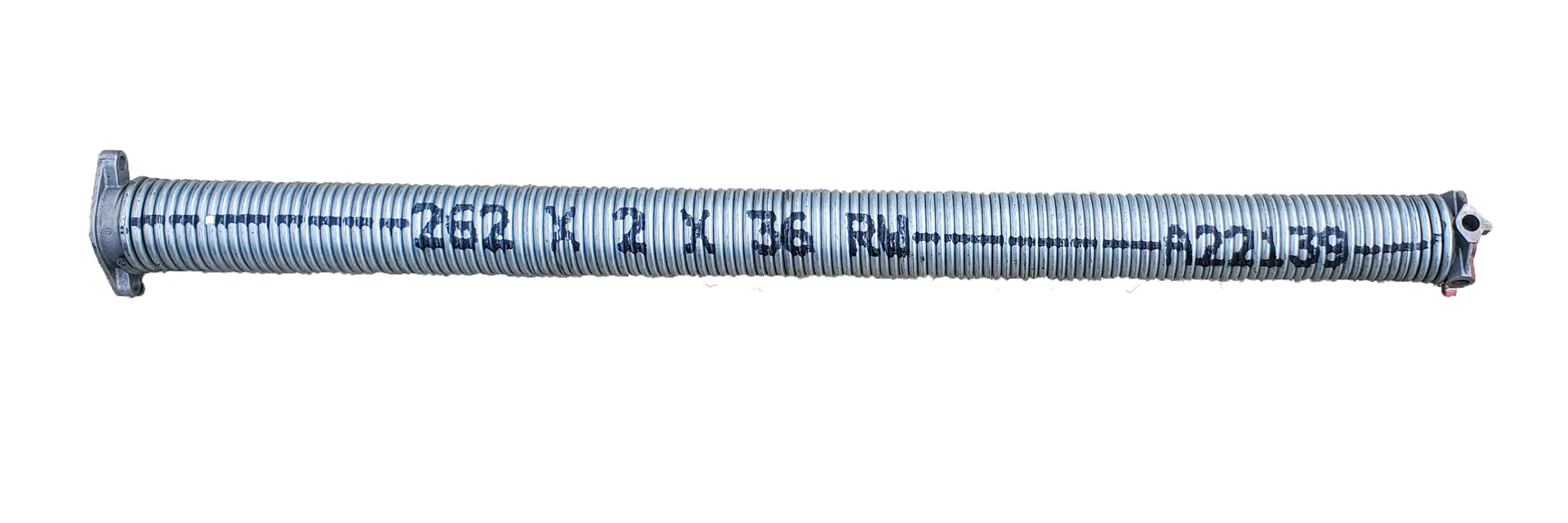
| Torsion spring pair, 10,000 cycle | $45 to $75 |
| Extension spring pair | $30 to $55 |
| Galvanized cable pair | $7 to $16 |
| Cable drum, each | $12 to $30 |
| Nylon roller, each | $1.50 to $4 |
| Steel hinge, each | $1.25 to $5 |
| Opener belt or chain | $25 to $50 |
| Bottom weather seal, 9 ft | $12 to $30 |
Wholesale price bands by part
- Torsion spring 10,000 cycle$42-$78
- Torsion spring 30,000 cycle$75-$125
- Extension spring set$28-$54
- Galvanized cable pair$9-$19
- Nylon roller set$14-$32
- Hinge set residential$12-$29
- Opener drive belt$18-$38
- Weather seal 16 ft$22-$48
These are illustrative bands, not vendor quotes. They show the low-to-high range an owner should expect before freight and account discounts.
A larger wire size and a higher cycle rating raise a spring price by 20 to 35 percent. The higher-cycle spring lowers cost per cycle over the life of the door. That is the first cost driver: cycle rating changes unit price and replacement frequency.
Before ordering opener parts, check the opener repair vs replace decision so you do not spend $45 on a belt for a unit that should be replaced.
Line by line landed cost
Many distributors set minimum order thresholds. A cash account with a $1,500 order threshold may cut list price by 8 to 15 percent. A lower threshold of $300 might carry only 3 to 5 percent off. Paying by ACH instead of card often removes a 2 to 3 percent card fee. These are the second and third cost drivers: order volume and payment method.
Tier names and cutoffs are set by each supplier. Action Industries, DDM Garage Doors, and North Shore Commercial Door each publish or quote their own account levels. Ask each one for its current tier sheet and its ACH terms in writing. Confirm whether the ACH discount replaces the card fee or stacks with the volume tier.
Cash account thresholds vs discounts
$1,500 order
- List price cut
- 8-15% off
- ACH vs card
- Removes 2-3% fee
- Inventory risk
- Higher carrying cost
$300 order
- List price cut
- 3-5% off
- ACH vs card
- Removes 2-3% fee
- Inventory risk
- Lower carrying cost
Use the U.S. Small Business Administration's finances guidance to compare the real cost of a cash account against the carrying cost of extra inventory. A $1,500 order that sits on the shelf may cost more in cash than the discount saves if the parts are not moving.
Three ordering habits that cut net cost
- Pull recent service tickets and group parts by SKU and quantity used.
- Ask three suppliers for a landed-cost quote on your top 20 SKUs, with freight, minimums, and payment terms shown separately.
- Consolidate one order to cross the free-freight threshold and avoid multiple small-order fees.
- Track actual used cost per truck, not list price per part.
Run a request for quote like any other Procurement job: one sheet per order, with columns for SKU, quantity, unit price, freight, small-order fee, account tier, and payment terms. This is the same practice larger buyers use, but it works for a two-truck shop.
What quotes leave out
Freight, small-order fees, and minimum order thresholds often hide. A $9 cable pair can become $28 when ordered alone because of a $12 small-order fee and $7 freight. Ask for a line-item landed cost quote before you compare suppliers.
Hidden costs on a single cable pair
- $9cable pair list price
- $12small-order fee
- $7freight
- $28landed cost alone
Also confirm if the spring is made to order. A custom spring has a longer lead time and cannot be returned if the technician measured wrong.
A line-item landed cost quote for one small order looks like this:
| Line item | Amount (USD, illustrative) |
|---|---|
| 6 galvanized cable pairs at $11 each | $66 |
| 1 torsion spring pair, 10,000 cycle | $58 |
| 1 opener belt | $34 |
| Subtotal | $158 |
| Small-order fee, order under $250 | $12 |
| Ground freight | $18 |
| Cash-account discount, 3 to 5 percent tier | minus $5 to $8 |
| Landed total | $180 to $183 |
Put those numbers into your next quote with pricing examples so the job quote covers landed parts cost and a markup that keeps the truck profitable.
Example: stocking a two-truck operation
A two-truck shop that goes through eight torsion spring pairs might buy 10 pairs at once. At an illustrative $68 landed per pair, the order totals $680.
Buying pairs one at a time at $84 from a retail counter would total $672 for eight, but the wholesale order also covers two extra pairs for inventory. The real saving comes from eight fewer counter trips, eight avoided retail markups, and two spare pairs on the shelf.
Have techs use a team training checklist to record spring wire size, inside diameter, and length before ordering.
Where owners overspend
Owners overspend in three ways: buying common parts one job at a time, paying emergency freight for a spring they could stock, and ordering the wrong cycle rating.
A 10,000-cycle spring is cheaper up front but may be replaced twice as often as a 30,000-cycle spring in a busy commercial door. Stocking standard 30,000-cycle springs for high-traffic doors lowers cost per cycle, even though the pair costs $30 to $50 more.
A repeat customer from a tight parts quote often produces more referrals, which lowers acquisition cost over time.
Common questions
Should I buy OEM or aftermarket garage door parts? OEM parts from Clopay, Amarr, or LiftMaster authorized dealers fit without modification, but aftermarket springs and cables from US distributors like DDM Garage Doors often meet the same spec at 20 to 35 percent less. What is a cash account in garage door parts buying? A cash account usually means you pay by cash, ACH, or check on invoice, and the distributor gives tiered discounts once your purchase volume crosses set thresholds. How much does freight add to a parts order? Freight and small-order fees typically add $12 to $75 on a single residential parts order, which is why consolidating orders to a free-freight threshold matters. When should I stock springs instead of ordering per job? Stock common torsion and extension spring pairs once a given spring size repeats at least twice across recent jobs, because emergency freight and retail markup outweigh carrying cost.