Guides
The garage door service equipment list, priced by priority
A prioritized garage door service equipment list covers access gear, diagnostic tools, and the counterbalance parts worth stocking first for repairs.
What to take away
- Buy access and diagnostic equipment before parts. Both are used on every visit; a torsion spring sits on the shelf until one door needs it.
- Stock is a bet on the doors on your route. Torsion springs are wound to a wire diameter and inside diameter that match one door, so an assortment is a guess until your own callbacks correct it.
- Cycle rating decides spring life. A standard 10,000-cycle spring on a door that runs six times a day is a callback scheduled about four and a half years out.
- The operator, not the door, sets the entrapment rules. UL 325 governs the close-force and photo-eye behavior you are testing against, and the CPSC explains what that standard requires.
- Log every visit you could not finish, with the missing item named. That log, not a supplier catalog, decides what goes on the van next.
The van is the production unit
A customer never sees your shop. They see a van pull in and a technician walk to the door. The next twenty minutes depend on whether the failed part is behind that person.
Two things follow. A sorted van beats a full one, because a part a technician cannot find in six minutes is a part you do not have. And stock is not a one-time purchase. It is a running bet corrected by your own failed visits.
Access and lifting equipment, named
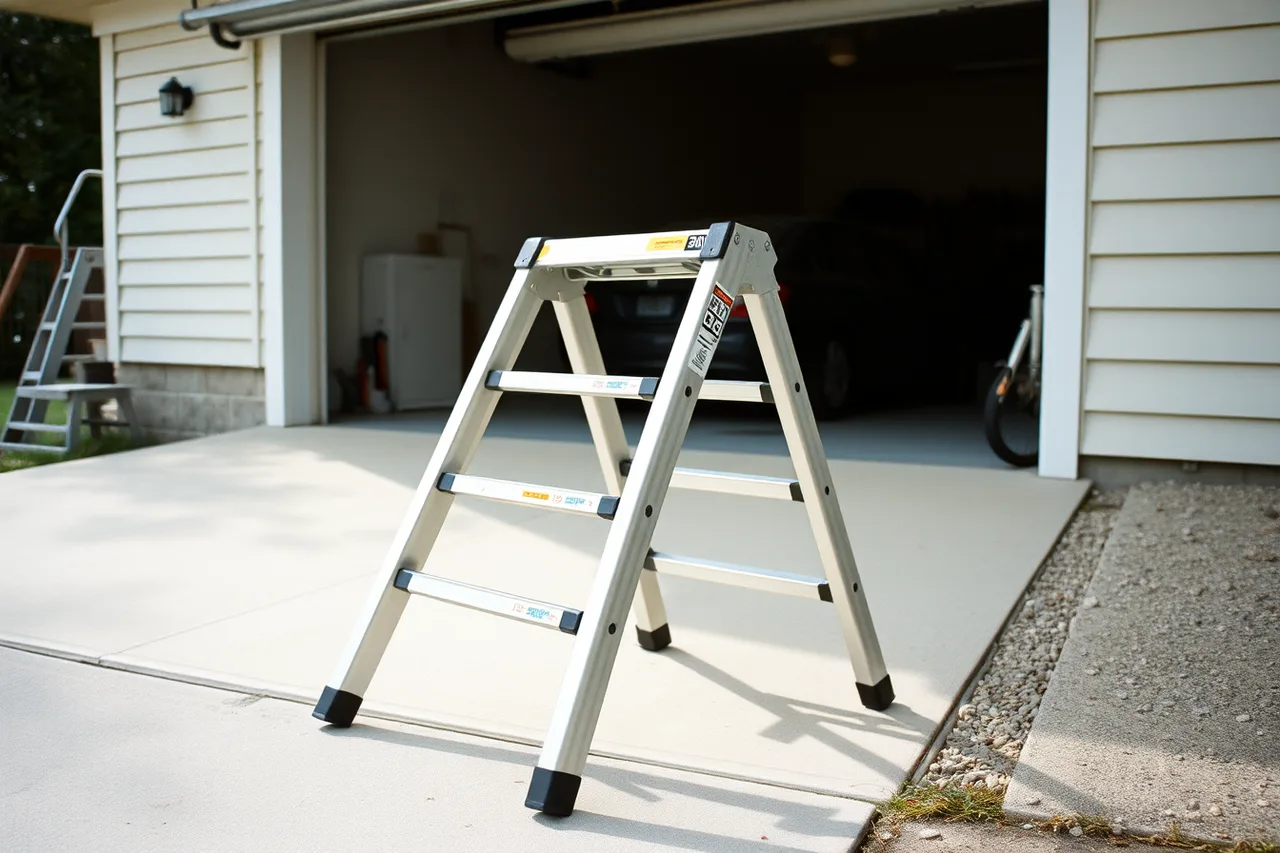
Almost all garage door work happens overhead, often on a sloped driveway with a car parked under the door.
Access and lifting equipment
| Item | What it is | Why it is on the list | Typical US price range (2025) |
|---|---|---|---|
| Little Giant Velocity or Werner MultiLadder | Articulating aluminum ladder, 300 lb duty rating | Sets up on a driveway slope where a straight ladder will not sit flat | $250 to $450 |
| Werner NXT1A06 step ladder, 6 ft | Fiberglass stepladder, non-conductive | Sensor and track work at the header, where an aluminum ladder near wiring is the wrong tool | $100 to $180 |
| Werner PD6206 rolling platform | Platform with guardrail and locking casters | Two-handed work at height, such as drum and cable inspection | $450 to $800 |
| 3M DBI-SALA harness and anchor strap | Body harness with a roof anchor | Required by many insurers once a technician is on a ladder above a set height | $150 to $350 |
| Traffic cones and a floor mat | Cones plus a rubber-backed mat | Marks the work zone in a garage a customer or a child can walk into | $30 to $80 |
Ladder duty ratings, working heights and load limits come from the manufacturer's label, not from a supplier's summary. Your written program starts with what OSHA publishes on safety and health programs, then adds whatever your state plan and insurer require.
Prices above are typical US street ranges in 2025 and vary by supplier, region and duty rating.
Diagnostic equipment, named
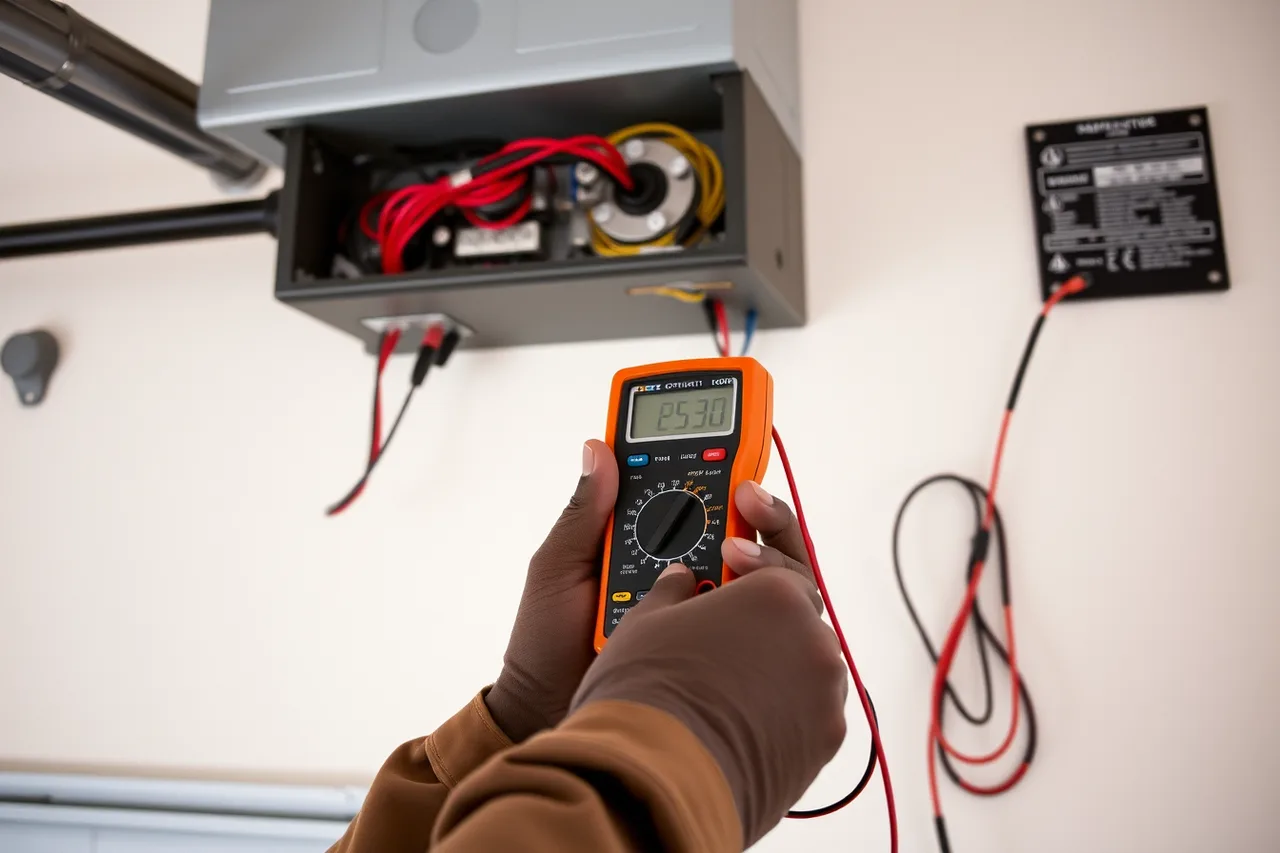
Most "door will not close" calls come down to one of four faults: a blocked or misaligned photo eye, a frayed cable, a track knocked out of plumb, or an operator that lost its travel limits. Each has a different fix.
Guessing between them is how a shop makes two trips and bills for one.
Diagnostic equipment
| Item | What it is | Why it is on the list | Typical US price range (2025) |
|---|---|---|---|
| Klein Tools MM325 multimeter | CAT III 600V digital multimeter | Checks operator supply voltage and control wiring before you condemn a logic board | $50 to $80 |
| Chamberlain MyQ or LiftMaster 889LM control panel | Operator wall control with diagnostics | Reads the operator's own fault code instead of guessing at it | $50 to $120 |
| Force gauge, push-pull, 0 to 50 lbf | Spring scale for measuring close force | UL 325 sets the maximum closing force; you measure against it rather than by feel | $30 to $100 |
| Torque wrench, 1/2 in drive, 20 to 150 ft-lb | Click-type torque wrench | Track brackets and bottom fixtures have a torque value in the manufacturer's instructions | $50 to $150 |
| Door weight scale or bathroom scale and a block | Weighs the door at the center | Spring sizing needs the door weight; guessing it is how you order the wrong spring twice | $20 to $150 |
| Smartphone with a level app and a 4 ft spirit level | Level plus a camera | Records track plumb, and photographs the fault before you touch it | Level $10 to $40; phone not priced |
The entrapment rules you are testing against are federal, and the CPSC's FAQ on automatic residential garage door operators is the plain-language starting point. UL 325 is the standard behind it.
Prices above are typical US street ranges in 2025 and vary by supplier and brand.
Counterbalance parts: what to stock and what to order
A torsion spring is not a generic part. It is wound to a wire diameter, an inside diameter and a length that match one door's weight and height. Two houses on the same street can take different springs.
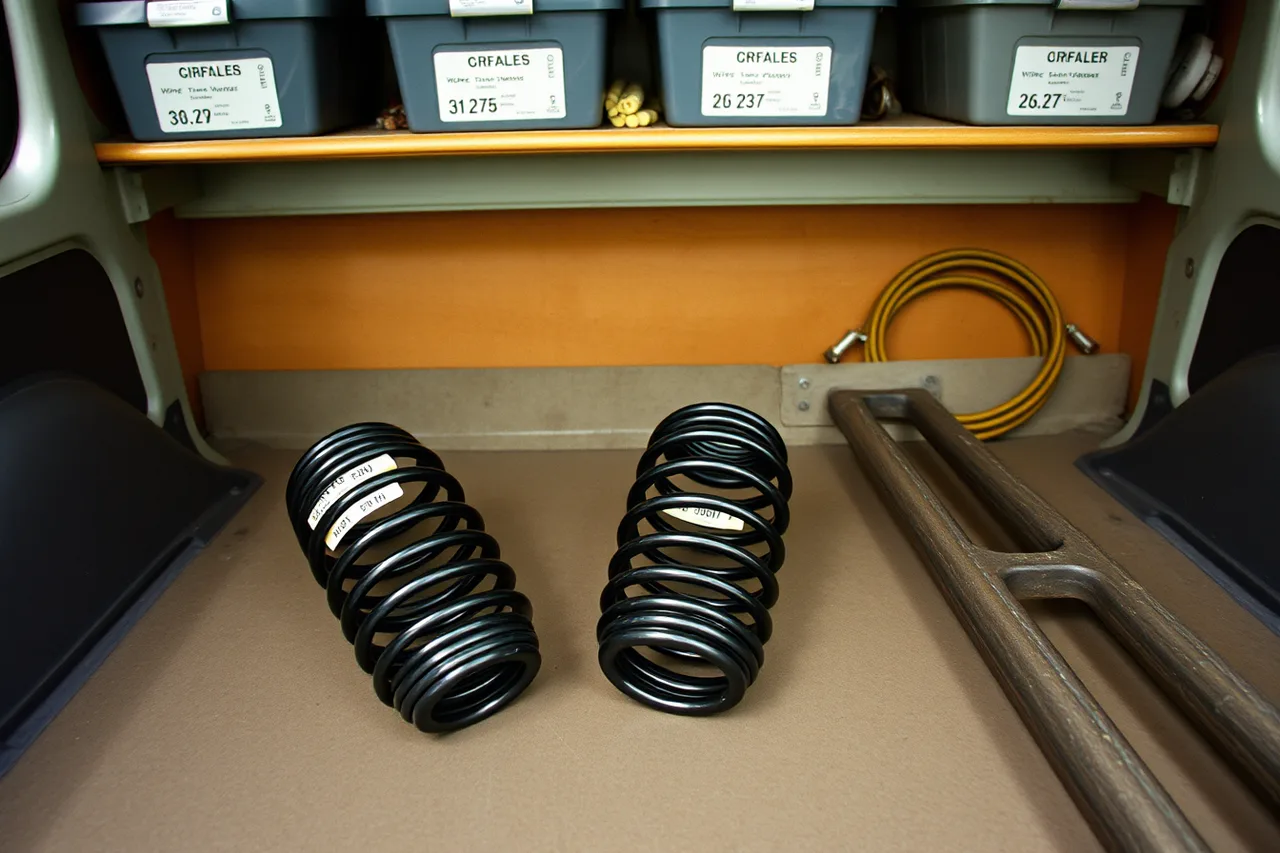
That is why the first month's stock is deliberately thin. Order one spring pair for the door types you actually see, and let the missing-item log widen the range.
Stock these first:
Counterbalance parts to stock
- Torsion springs in the two or three sizes that match the most common door on your route, plus the winding bars the manufacturer's instructions call for.
- Extension springs with safety cables, for the older doors in the area.
- Nylon and steel rollers, 2 in and 3 in stems.
- Standard hinges, 14 gauge and 11 gauge, plus a few heavy-duty bottom brackets.
- Cables in the two lengths your common door heights need, with the correct drum pair.
- Operator safety sensors and a spare logic board for the two operator brands you see most.
Typical US price ranges: torsion springs $40 to $120 each, winding bars $20 to $50 a pair, extension springs with safety cables $25 to $70 a pair, rollers $1 to $5 each, hinges $2 to $10 each, cables $10 to $30 each, safety sensors $20 to $60 a pair, and a spare logic board $80 to $250.
Springs carry a cycle rating, printed on the tag. A 10,000-cycle spring is rated for about 10,000 open and close cycles. Divide that by the door's daily cycles to get the expected life, and compare it to the door's age before you quote a repair.
The startup and market guide covers why the area survey comes before the purchase order.
Fasteners, torque and the spec sheet
Fastener grade matters more than most new technicians expect. A lag screw into a header and a machine bolt through a hinge are not interchangeable, and neither is a Grade 2 bolt where the instructions call for Grade 5.
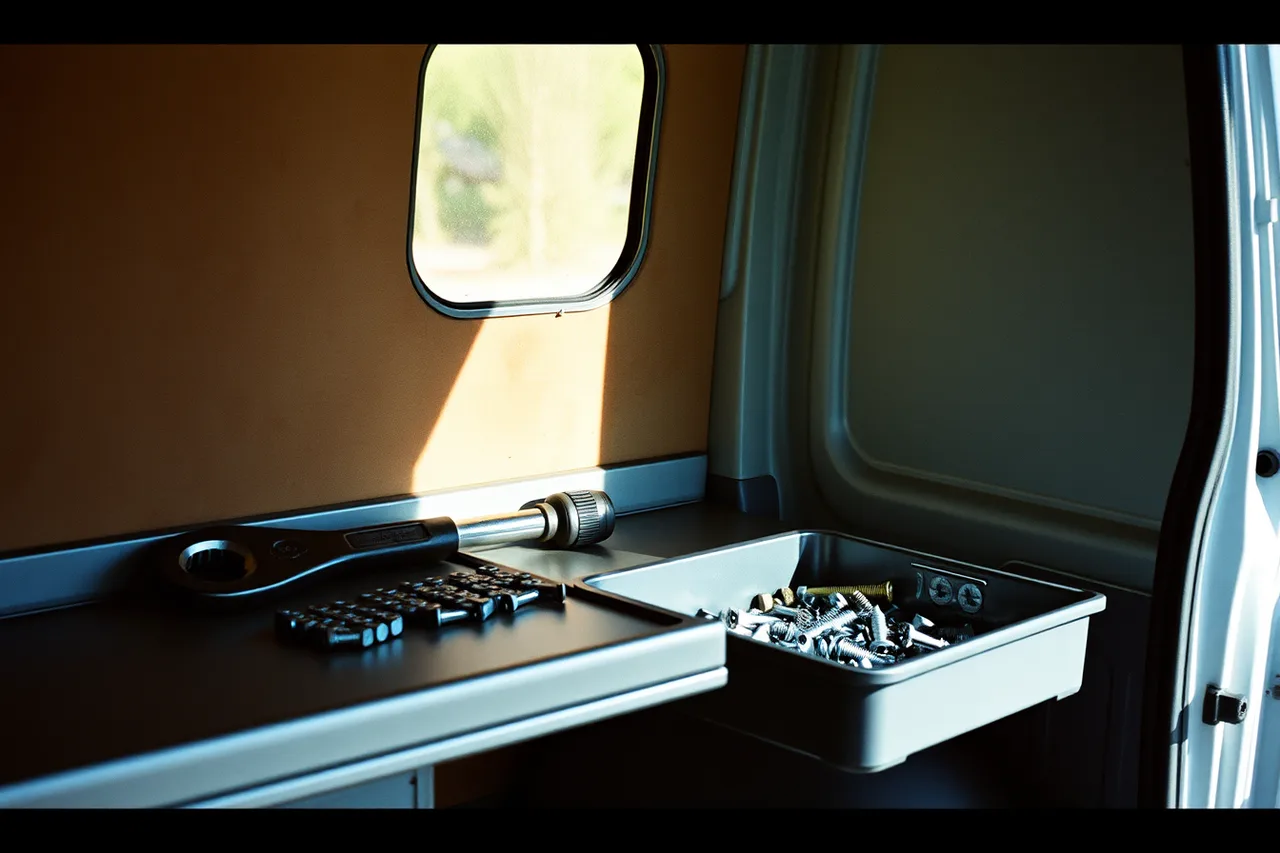
Keep a laminated copy of the manufacturer's torque table in the van. Track bracket bolts, bottom fixture bolts and operator rail bolts each carry a value, and the value comes from the door or operator maker, not from feel.
Replace fasteners with the same grade and finish you removed. A zinc-plated bolt where a galvanized one came out is a rust callback in two winters.
Typical US prices: Grade 5 bolts $0.50 to $3 each, lag screws $0.25 to $2 each, and a printed torque table $10 to $25.
Records, invoicing and the paper trail
An unrecorded job cannot be priced properly or defended later. Whatever captures the visit has to work in a garage with poor cell signal, and it has to give the customer something before the technician leaves.
Keep those records for the period your tax authority requires. The IRS overview of records a business should keep is a reasonable baseline, and your accountant sets the rest for your entity.
In Canada, invoicing rules differ by province. GST, HST and QST each have their own registration thresholds and remittance schedules, and the Canada Revenue Agency publishes the current figures. Confirm your own obligations with an accountant.
The same records feed the stock decision. Without them, the missing-item log is guesswork.
Buying order when the budget is short
Buy in this order when everything cannot be bought at once. Typical US ranges are listed after each step and vary by supplier.
- Access equipment sized to the work and the surfaces you meet. Typical: $800 to $1,600.
- Personal protective equipment, plus whatever the manufacturers' instructions require for the tasks you take on. Typical: $200 to $500.
- Diagnostic tools, because they decide what happens on every visit. Typical: $200 to $500.
- Hand tools for the fault types on your month-one menu. Typical: $300 to $800.
- The narrow counterbalance assortment. Typical$400 to $1,200.
- Everything else, funded from evidence. Typicalvariable.
The SBA's business guide is a reasonable reference for where equipment sits in a wider launch, though the order above comes from the shape of the work.
Replacing, retiring and the second van
Set a retirement rule before anything gets old. Retire ladders and harnesses by condition and the manufacturer's inspection guidance, never on sentiment. Replace a meter when you stop trusting its readings.
Replace a vehicle when unplanned downtime starts costing booked jobs. Track two numbers: days unavailable and jobs moved as a result.
A second vehicle is a scheduling decision, not a capacity one. Buy it when the interruption pattern costs more than the vehicle does.
Common questions
How much counterbalance stock should a new van carry?
Less than feels comfortable, then corrected fast from your own missing-item log. The right answer depends on which doors are on your route, which is why it cannot come from a page.
Is a bigger van worth it early?
Only if you are doing installation work. For repair-led shops the constraint is organization rather than volume, and a larger van often just spreads the same stock further apart.
Should tools be supplied to technicians or expected from them?
Whichever you choose, write it down before the first hire and apply it consistently. The problem is never the policy, it is having two of them.
What is the most commonly missed piece of equipment?
Something that records the visit properly. Shops equip themselves to do the work and then have no way to show what they did, which costs them on pricing reviews, on callbacks and on any dispute.