Guides
Garage door service training checklist: stages that set dispatch permission
A staged garage door service training checklist for owners: each stage closes on an observed demonstration and sets what a technician may be dispatched to alone.
What to take away
- This checklist is a ladder, not a syllabus. Each stage says what the person may be dispatched to alone once it is closed.
- Nothing closes on a conversation. Every line closes with an observed demonstration, dated and initialed by the observer.
- Nobody skips a stage because the schedule is busy. That is the failure mode this document exists to prevent.
- Two things can never be granted internallyanything a licensing body issues, and anything a manufacturer's instructions reserve to a particular condition.
- Keep the grid current the day something is granted. A sign-off recorded weeks later is a guess.
How to use the ladder
Each stage has a heading that states the dispatch permission it grants. A person sits at exactly one stage at a time, and the grid in the office shows where everyone is. The reasoning behind dispatching this way is in the hiring and training guide.
Stage 0: may travel with a technician, may not work
- Site safety induction covering the shop's written program
- Personal protective equipment issued, fitted, and its use demonstrated
- Vehicle familiarizationlayout, stock locations, and the restock routine
- Incident procedure explained and located in the vehicle
- Conduct in a customer's homeaccess, footwear, language, and what is never promised
- The shop's rule on which work is done alone, read and acknowledged in writing
The written program these lines refer to is built from the employer safety material published by the Occupational Safety and Health Administration, together with the manufacturers' instructions for the products your shop services.

Stage 1: may assist under direct supervision
- Access equipment set up correctly on a level and a sloped surface, observed
- Work area secured in a domestic garage with a vehicle present, observed
- Door types and components named correctly, including what the counterbalance does
- Manufacturer documentation located for three different products, unaided
- Hand tools used correctly on non-critical components, observed
- Photographic record of a condition found, taken and filed correctly
Stage 2: may be dispatched alone to defined non-critical work
- Named list of work types agreed and written down for this person
- Full job record completed unaided on three visits, reviewed and accepted
- Price and scope explained to a customer, observed twice
- Requote trigger applied correctly in a live situation, or in a rehearsed one if it has not arisen
- Payment taken and reconciled correctly
- Stock used logged so the vehicle can be restocked, three days running
Do not let this stage's list expand informally. Adding a work type is a sign-off event with its own date.
Stage 3: may be dispatched to diagnostic visits alone
- Intake notes interpreted correctly before arrival, observed across several jobs
- Symptom separated from fault on a door that will not close, with the alternatives ruled out one at a time
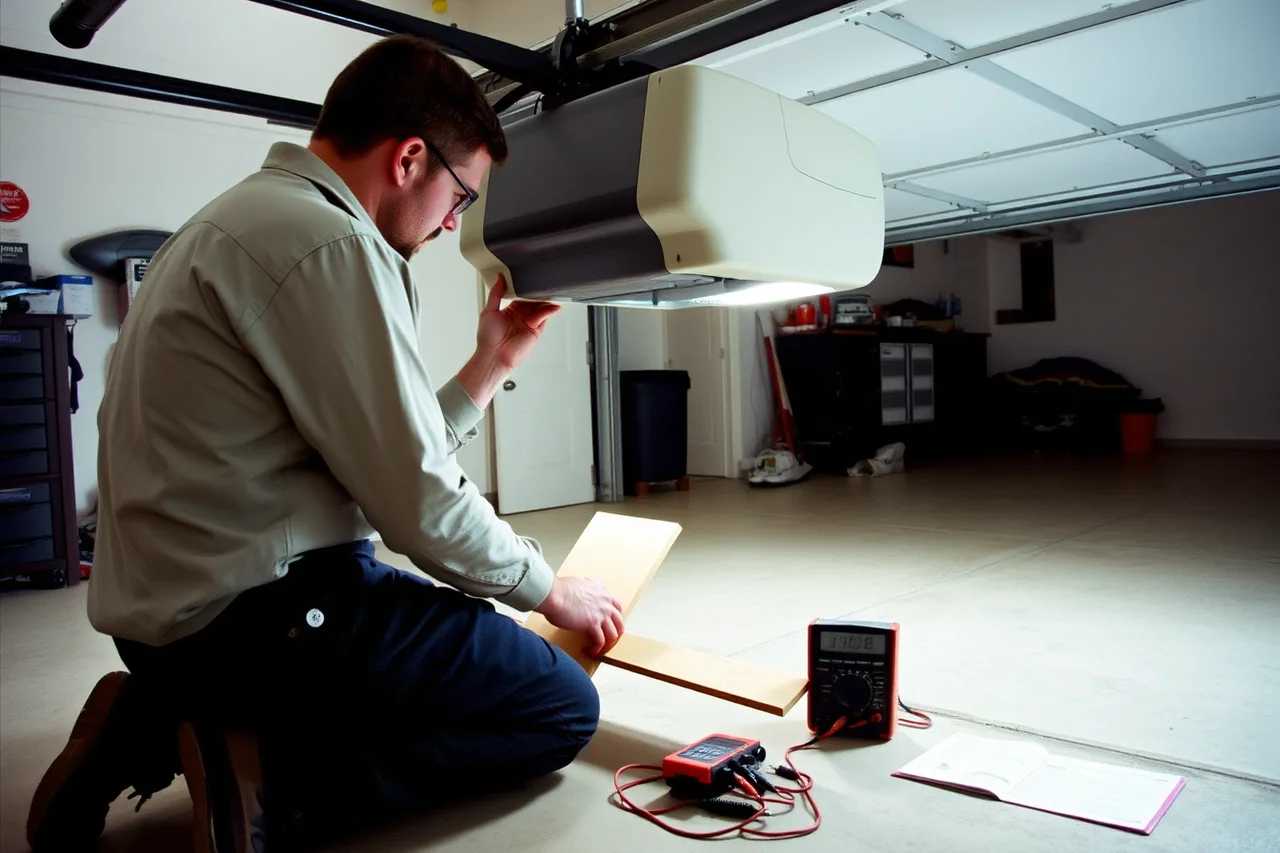
- Operator controls and safety features checked as the manufacturer specifies, observed
- A fault outside their sign-off correctly identified, stopped, and escalated
- Findings explained to a customer who does not want the answer, observed
- Quote produced on site that a reviewer would accept without amendment
The check on an operator's safety features should be taught against the model's own instructions and against the federal requirements described in the CPSC's FAQ for automatic residential garage door operators. Teach where to look it up, not a remembered version of it.
Stage 4: may perform higher-risk work per the shop's written rule
- The shop's written rule for this work reviewed with the owner, in person
- Manufacturer's instructions for the specific products worked through in full
- Supervised completions at the number your rule requires, each recorded individually
- Equipment for this work checked, and its condition rules understood
- Escalation point agreedwhat is not attempted, and who is called
- Insurer's conditions on this work read and acknowledged
This stage is where the shop's own decision lives. Whether a second person is required, how many supervised completions are needed, and what is never attempted are yours to set, informed by the manufacturers' instructions and your insurer. Write them down before anyone is trained against them.
What cannot be signed off internally
- Any license, registration, or certification issued by a state or municipal body. Establish what applies through the licensing and compliance guide.
- Any condition a manufacturer's instructions reserve to a specific qualification or tool.
- Anything your insurer has made a condition of cover.
Record these separately from the ladder, with their expiry dates, because they renew on somebody else's schedule.
Refresh, and what triggers it
Refresh the safety items at a set interval. Re-open the stage when a person returns from a long absence, a new product family enters the service menu, or a callback pattern points at a technique.
Re-open it too when vehicle stock changes enough to alter what can be completed on site. The equipment and setup guide covers the stock side.
Training progress should connect to pay in a way people can see. How to structure that without buying the wrong behavior is discussed in pay rates and labor costs. If you are training toward coverage in a new district, check what that district's doors actually need first, using the market selection guide.
What the paperwork is for
Three audiences read these records: a new supervisor deciding what to dispatch, an insurer after an incident, and you, when a callback pattern needs explaining. Keep them where all three can find them.
Keep the wage and hours side of the employment file consistent with the Department of Labor's compliance assistance for small businesses. Also keep it consistent with the practice guidance in the Equal Employment Opportunity Commission's small business resource center.
If a training decision affects what someone is paid, check the pay assumption behind it against published wage estimates by occupation and area. These estimates start the labor cost assumptions behind each stage's pay.
Common questions
How long should a person spend at each stage?
As long as the demonstrations take. Attaching weeks to a stage produces sign-offs granted by the calendar rather than by evidence.
Who can observe and sign?
Someone already signed off for that work, named in advance. Rotating observers is useful; anonymous ones are not.
What if someone is capable but the paperwork is not done?
Then they are not signed off. That is the point of the system, and the fix takes an hour rather than an argument after an incident.
Does experience elsewhere shorten the ladder?
It can shorten stages, and it should never skip stage 0 or stage 4. Habits from another shop are exactly what stage 4 exists to examine.