Guides
Garage door service operations, reviewed without the sales pitch
Garage door service operations depend on a written intake script, five dispatch rules, clear job handoffs, and visit records that support a weekly review.
What to take away
- The working day in this trade is a queue with an interrupt. Design it that way, or the interrupt designs it for you.
- The person answering the phone performs the first diagnosis. What they ask determines whether the truck arrives with the right part.
- Write down which job wins when an emergency call collides with booked work. If that rule lives in somebody's head, it will be applied differently every week.
- Jobs die at handoffsphone to schedule, schedule to truck, truck to invoice. Each handoff needs an owner and a record.
- Review the week on completed visits and failed visits, not on revenue. Revenue tells you what happened; the failure list tells you why.
The day is a queue with an interrupt
Everything scheduled in this business is provisional. A spring lets go at nine, a car is trapped, and the caller needs somebody now. That call has to displace something, and the only question is whether the displacement is a decision or an accident.
Building the day with slack
- Keep part of the day uncommitted
- Place movable jobs where interruption is cheapest
- Give one person authority to move work
- Tell the moved customer before they notice
The last point is where reputations are made. A moved appointment handled with a phone call is an inconvenience. The same appointment discovered by a customer waiting at home is a review.
The phone is the first technician
By the time a technician is on a driveway, the questions asked on the call have decided most of the outcome. A good intake gets at four things: what the door is doing, what it was doing before, what the door and opener look like, and whether the vehicle is trapped inside.
Intake script questions
- What is the door doing?
- What was it doing before?
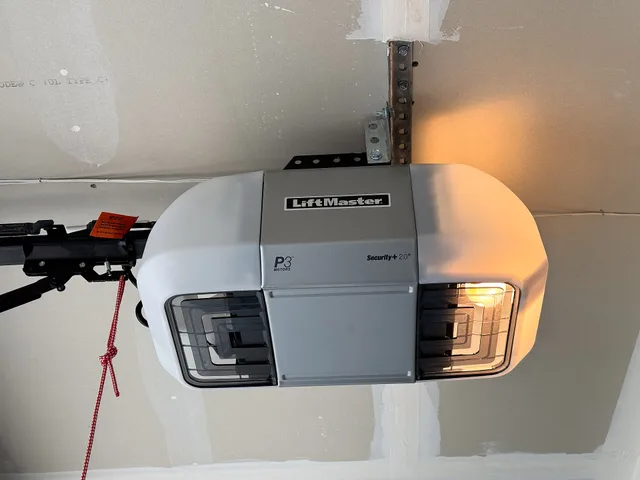
- What do door and opener look like?
- Is a vehicle trapped inside?
Those needs differ: a door that will not close may involve a blocked or misaligned safety sensor, a damaged cable, a track problem, or an opener that lost its settings. Other components worth identifying by name include torsion and extension springs, photo-eyes, limit switches, rollers, and hinges.
Those need different parts, and a caller cannot tell you which without being asked properly.
Use this four-question intake script in order, recording each answer in the job record:
- “What is the door doing right now—will it open, close, or stay in place?”
- “What happened just before the problem, and was the door working normally before then?”
- “What type of door and opener do you have? If visible from a safe distance, can you identify the spring, photo-eye, cable, track, roller, or hinge involved?”
- “Is a vehicle trapped inside?”
The dispatch decision, written down
Give the dispatcher a rule they can apply without calling you, covering:
- Treat a trapped vehicle as an emergency trigger, and record why it displaces booked work.
- Match the assignment to a technician signed off for that work.
- Check the intake against the parts and equipment available on the truck before dispatch.
- If booked work must move, assign who will contact the customer and make sure that call happens promptly.
- For calls at the same priority, use a declared tie-breakerfirst come, closest, or another criterion the shop can defend.
Written dispatch rule
- Define emergency by customer situation
- State which booked work may move
- Set diversion distance before another vehicle
- Name who tells displaced customer
- Decide two emergencies arriving together
Point five is the one shops discover the hard way. Decide it in advance: first come, closest, or by whatever criterion you can defend afterward.
Dispatch models compared
Works when
- Owner dispatches from the truck
- One or two vehicles, low volume
- Dedicated dispatcher, part-time
- Three or more vehicles
- Answering service plus a rule set
- Calls arrive outside working hours
- Technician self-scheduling
- Experienced staff, defined territories
Cost
- Owner dispatches from the truck
- The owner's attention, on every job
- Dedicated dispatcher, part-time
- A wage, and a handover routine
- Answering service plus a rule set
- A monthly fee and a scripting effort
- Technician self-scheduling
- Consistency, and a view of the whole day
Fails when
- Owner dispatches from the truck
- Volume grows and calls go unanswered
- Dedicated dispatcher, part-time
- Nobody covers the role when they are out
- Answering service plus a rule set
- The script does not cover the odd case
- Technician self-scheduling
- Two technicians decline the same job
Most shops outgrow the first row later than they should, because the cost of it is invisible: it appears as missed calls rather than as an expense.
Where jobs die
- Phone to schedule. The intake answers exist but nobody transferred them, so the technician arrives knowing only the address.
- Schedule to truck. The job is assigned to someone not signed off for that work, and the visit becomes a survey.
- Truck to parts. The diagnosis is right and the part is not on board, which is a stock decision made months earlier in the equipment and setup guide.
- Work to record. The job is done and nothing is written, so nothing can be reviewed, priced, or defended.
- Record to invoice. The work is complete and the invoice goes out days later, which is a cash problem the pricing and profit guide cannot fix.
Give each handoff an owner and a single artifact that proves it happened. Not a meeting, an artifact.
Where jobs die
- Phone to schedule: intake answers not transferred
- Schedule to truck: wrong sign-off, visit becomes survey
- Truck to parts: right diagnosis, part not on board
- Work to record: job done, nothing written
- Record to invoice: invoice goes out days later
The job record is the operating system
One record per visit, made on the driveway, not in the evening. It holds what was reported, found, and done. It also holds parts used, time on site, before and after photos, and what the customer was told.
That record answers a warranty question, a pricing review, a callback investigation, and an insurance claim. Keeping it is ordinary practice. The IRS overview of records a business should keep is a reasonable minimum to build on.
A shop without this record has no operations to manage. It has forty independent days.
Safety sits inside the workflow, not beside it
Safety fails when it is a separate document nobody opens. Put it into the sequence: a condition check before work starts, a rule about which work is done alone, and a stop-and-call point when something is not as expected.
The Occupational Safety and Health Administration's employer material on safety and health program management describes what the written program covers. The technical content comes from the manufacturers' instructions for the doors and operators in front of your people.
Where an automatic operator's behavior is part of the job, the federal requirements summarized in the CPSC's FAQ on residential garage door operators belong in the same sequence. Before a workflow assumes a job can be scheduled at all, check the applicable state contractor licensing agency or board and the local building department; requirements and responsible authorities vary by jurisdiction. See the licensing and compliance guide. A permit found mid-job stops the day.
Staffing the workflow you designed
A workflow is a set of promises about people being available. Check that the design matches the rota you can actually staff, including the hours when emergency calls arrive and the person who answers the phone while everyone is on a job.
Labor is the largest operating cost in this business. Your own payroll is the reference, but the U.S. Bureau of Labor Statistics' Occupational Employment and Wage Statistics (OEWS) program is one external check on local occupational pay and whether the staffing model you designed is affordable in your area. The overall shape of the business it serves is set in the startup and market guide.
The weekly review
Four questions, fifteen minutes, same time every week:
- How many visits were completed, and how many were dispatched?
- Which visits did not close on the first trip, and why?
- Which booked jobs were moved, and was the customer told in time?
- What did we not have that we needed?
The answers accumulate into the only improvement list worth having, and they change stock, training, and intake questions in that order.
Common questions
How much of the day should be left uncommitted?
Enough that a normal week's emergency volume does not displace booked work. Your own call log gives you that figure within a month; guessing gives you an argument every Tuesday.
Should technicians handle their own scheduling?
It works with experienced people and defined territories, and it fails when nobody can see the whole day. Most shops end up with a hybrid: a central view, with technicians able to resequence within their own day.
What is the single highest-value change for a small shop?
A written intake script. It costs nothing and it changes what is on the truck when the technician arrives.
How do we stop the owner being the bottleneck?
Write the decisions down. An owner is a bottleneck because the rules exist only in their judgment, and the fix is documentation rather than delegation of the decision itself.