Guides
Winter spring and opener pricing for garage door work in Winnipeg and Edmonton
Winter garage door pricing in Winnipeg and Edmonton turns on cold-brittle springs, thaw-week demand and after-hours premiums that carry the margin.
What to take away
- A torsion spring near its cycle limit snaps in prairie cold instead of stretching, so spring replacement is a winter revenue line, not a springtime job.
- General-purpose grease thickens below -20 C and the opener pulls more current to move a dragging door. That current draw is what kills openers in February.
- After-hours premiums of 50% to 100% on the labour rate are where winter margin sits, not the base call-out.
- Quote the cold version of the labour time1.5 to 2.5 hours for a two-spring torsion job against 1 to 1.5 in summer.
- A mid-winter thaw is the busiest booking window. Staff for it two deep and hold emergency slots open.
What prairie cold does to a torsion spring
Winnipeg runs weeks below -25 C. Edmonton trades a slightly milder average for longer cold snaps and harder freeze-thaw swings. The Canadian Centre for Climate Services publishes the zone data that underpins spring failure forecasts.
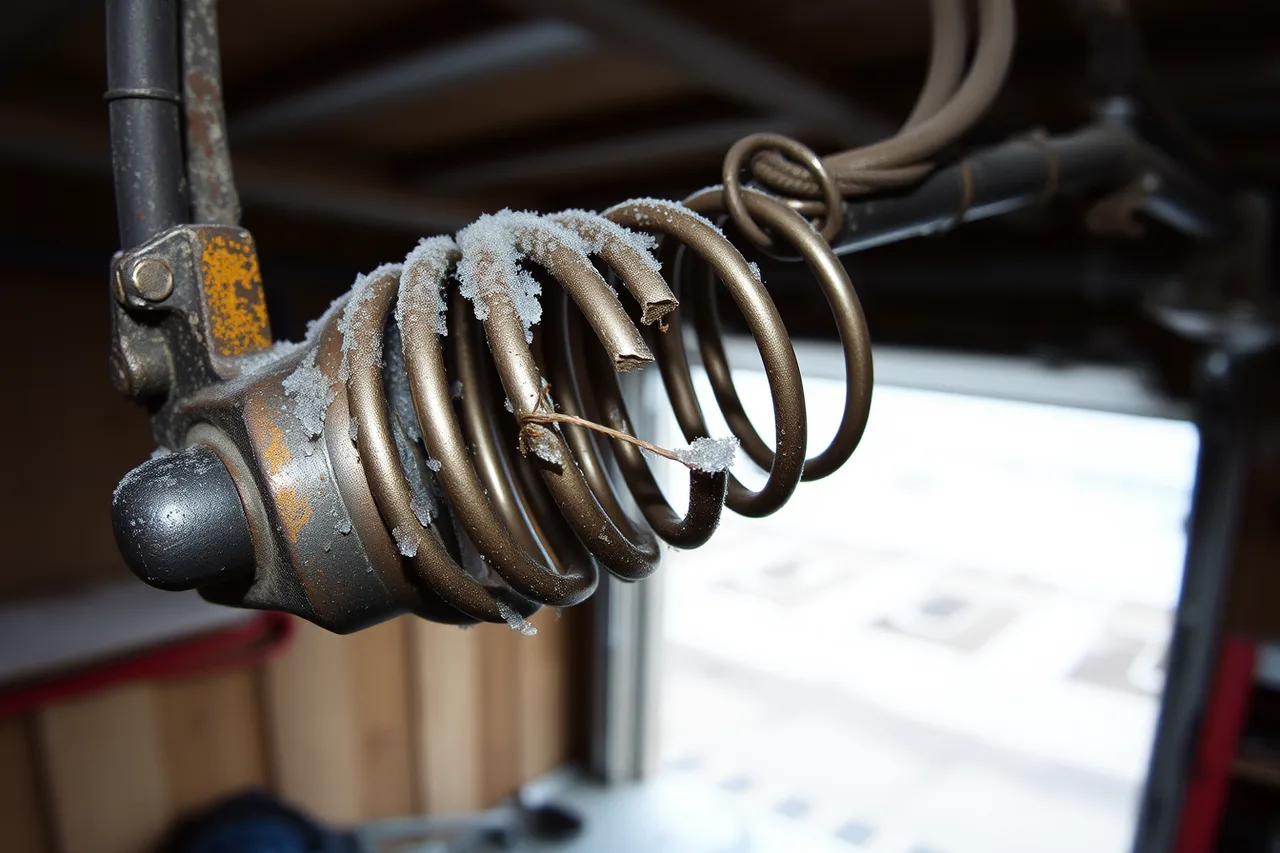
Cold does two things to a spring. It raises the brittleness of the steel, so a spring already near its cycle limit snaps rather than stretches. It also stiffens every moving part around it, so the spring carries more load on each cycle.
Cycle counts climb in heating season. A door that cycles four times a day in July might cycle eight in January, once school runs and delivery traffic are added. That is why spring replacement pays the winter bills in both markets.
The Garage door reference covers how springs, cables and openers interact under cold load. Estimators who understand the mechanism quote better, because they can explain why the failure happened instead of just naming a price.
Cold-rated lubricants and hardware that survive -30 C
General-purpose grease is the wrong product for a prairie winter. It thickens below -20 C, the rollers drag, and the opener draws more current to move a door that used to glide. That current draw is what burns out openers in February.
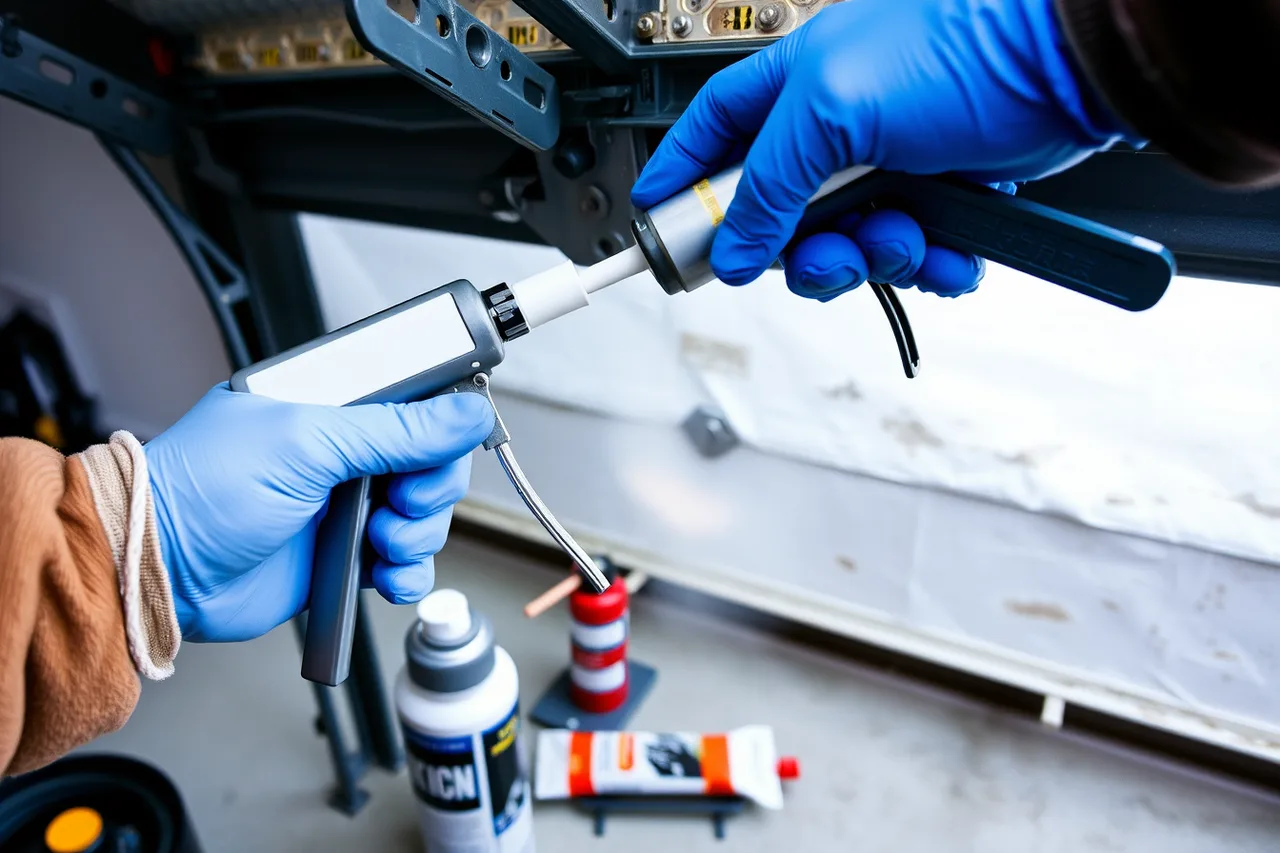
Use a lubricant named for low-temperature service: lithium-based white grease rated to -40 C, or a silicone spray for hinges, rollers and the torsion bar. Both stay fluid where heavy grease does not.
Hardware matters as much. Nylon rollers run quieter and resist cold stiffening better than steel. Sealed bearings hold their lubricant instead of letting meltwater wash it out. Weatherstripping should be cold-flexible PVC or EPDM, not vinyl that cracks at -30 C.
A winter tune-up covers lubricant on springs, hinges, rollers and bearing plates, plus a balance check. Charge for it as a line item. It is the cheapest way to prevent the emergency call you would otherwise take in January.
If you are building the product around that service, the packages and pricing guide covers how to bundle a tune-up with a spring inspection.
Emergency call-out rates and after-hours premiums
Emergency work is the highest-margin line in a prairie winter, and it should be priced like it. A door stuck open at -30 C is a security and heat-loss problem, and the customer knows it.
Winter price lines by city
Winnipeg
- Standard call-out, first hour
- $110-$150
- After-hours premium
- 50%-100% uplift
- Emergency spring pair, installed
- $450-$750
- Opener replacement, installed
- $500-$850
- Winter tune-up
- $120-$180
Edmonton
- Standard call-out, first hour
- $120-$160
- After-hours premium
- 50%-100% uplift
- Emergency spring pair, installed
- $475-$800
- Opener replacement, installed
- $525-$900
- Winter tune-up
- $130-$190
Typical structure in Winnipeg and Edmonton: a minimum call-out covering the first hour or two, hourly billing after that, and an after-hours premium for evenings, weekends and statutory holidays. The premium is usually a percentage uplift on the labour rate, not a flat add-on.
Winnipeg
- Standard call-out, first hour
- $110 to $150
- After-hours premium
- 50% to 100% uplift
- Emergency spring pair, installed
- $450 to $750
- Opener replacement, installed
- $500 to $850
- Winter tune-up
- $120 to $180
Edmonton
- Standard call-out, first hour
- $120 to $160
- After-hours premium
- 50% to 100% uplift
- Emergency spring pair, installed
- $475 to $800
- Opener replacement, installed
- $525 to $900
- Winter tune-up
- $130 to $190
These are sample price lines, not US templates. They reflect Canadian labour, parts landed in Canada and the travel distances in each city. Edmonton's sprawl adds travel time; Winnipeg's tighter core cuts it.
Set your own floor from your cost base. The garage door service pricing guide walks through building that floor from labour, parts and overhead rather than copying a competitor.
Labour times for spring, cable and opener work in a cold bay
Cold bays slow everything. Metal is stiff, fingers are numb, and a door that will not balance takes longer to diagnose. Quote the cold version of the time, not the summer version.
Cold-bay labour times
- Two-spring torsion replacement1.5-2.5 hours
- Single spring replacement1-1.5 hours
- Cable replacement, one side1-1.5 hours
- Opener replacement2-3 hours
- Spring plus cable plus tune-up3-4 hours
Add travel separately. A cross-city call in Edmonton can eat 45 minutes each way in winter traffic. A perimeter call in Winnipeg runs similar on a bad day.
Use the price garage door service jobs method to turn those hours into a defensible quote. Labour time is the number customers question most, so show it.
Worked example: a January after-hours call in Winnipeg
A Winnipeg homeowner calls on a Tuesday evening in January. The door is stuck half open, one torsion spring has snapped, and the opener is grinding.
January after-hours call checklist
- Confirm address, door size, spring type on phone
- Quote after-hours call-out and spring pair before dispatch
- Load a matched spring pair, not a single spring
- Inspect cables, drums and bearings while apart
- Offer winter tune-up as an add-on before leaving
- Photograph old spring and new install for file
The quote: after-hours call-out at the two-hour minimum, one emergency spring pair installed, and a tune-up. In Winnipeg that lands near $700 to $950 depending on door size and drive time. In Edmonton, add roughly 10% for travel and market rate.
The same job booked as a scheduled daytime visit drops the premium and usually the total by a third. That is the number to give the customer who asks whether it can wait until morning.
Equipment choices affect how fast those jobs go. The garage door service equipment list covers the winding bars, clamps and cold-weather lubricants worth carrying on every van.
Scheduling winter work around thaw cycles and shop access
Prairie winters are not one long freeze. Winnipeg and Edmonton both get mid-winter thaws, and those thaws are your busiest booking windows. Doors that froze shut in December free up in January, and customers call then.
Watch the forecast and staff up for the thaw. A run of days near freezing after a cold snap produces a spike in stuck doors, stripped gears and snapped springs. Book those days two deep if you can.
Shop access matters too. A cold bay that never gets above -5 C slows every job and raises rework risk. If you can heat the bay, labour time drops toward summer numbers, which pays for the heat.
Historical temperature records help you plan crew levels and set seasonal rates. The climate data download service gives the ranges behind the pricing table above.
Canadian labour rates also carry costs a US template ignores: workers' compensation premiums set by province, CPP and EI on every hour, and GST or HST on the invoice. The coverage cost context from a provincial board shows how those premiums are structured, and prairie boards work the same way. Build them into the rate before you quote.
To keep the calendar from collapsing in a thaw week, use the schedule garage door service jobs approach: cluster by zone, hold emergency slots open, and confirm parts before dispatch.
Common questions
Why do garage door springs fail more in Winnipeg and Edmonton winters?
Cold makes steel more brittle and stiffens the moving parts, so each cycle loads the spring harder. Heating-season use also raises daily cycle counts, which shortens spring life.
What lubricant should I use below -30 C?
A lithium-based white grease rated to -40 C, or a silicone spray for hinges and rollers. General-purpose grease thickens and drags the opener.
How much should an after-hours call-out cost?
A two-hour minimum plus a 50% to 100% premium on the labour rate is typical in both cities. The premium, not the base rate, is where the margin sits.
When is the busiest booking window in a prairie winter?
The mid-winter thaw. Doors frozen since December free up, and snapped springs and stripped gears surface in the same week.